Advertisement


The best golf courses in New York

May 29, 2025
Save for later

We love to use our new rankings as an answer to the great debate about which state is better for golf, New York or California. It can be answered in a variety of metrics. New York edges California for the most courses on our new list of America’s 100 Greatest Courses (15 to 14), and if you want to get more granular, the Empire State still has the edge: in the top 10: New York has three courses to California’s two, in the top 15, it’s five for N.Y., and two for California, and in the top 50, eight for N.Y., six for California.

If you include America’s Second 100 Greatest Courses, California beats New York, with 23 designs in California to 17 in New York (only two courses in N.Y. are ranked Nos. 101-200). So you could argue the depth of greatness might be better in California, but the advantage goes to the Empire State for top-end greatness.

Much of that is thanks to the depth of great golf courses on Long Island, one of the world's most desirable pieces of golf terrain. The combination of sand soils, proximity to the ocean and winds on both coasts and early golf architecture heritage is unmatched. Again, it’s not just about the top courses on the east end—Shinnecock Hills, National Golf Links of America, Friar's Head, Maidstone and Sebonack—each ranked among our top 55. Many of the courses mid-island and close to New York City would be top of the marquee almost anywhere else, including Bethpage Black, Garden City, Piping Rock, The Creek, Atlantic Golf Club, on and on.

Because New York is just so deep, we’ve extended our Best Courses in New York ranking to include the most designs than ever. Most of these courses would make a top 15 or top 20 list in another state. They deserve recognition because they are great.
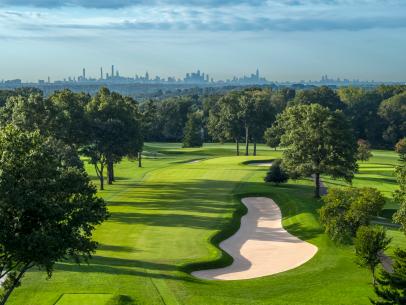
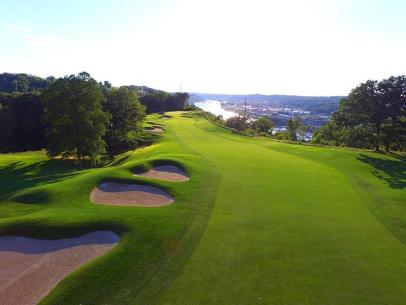
Below you'll find our 2025-'26 ranking of the Best Golf Courses in New York.

Scroll on for the complete list of the best courses in New York. Be sure to click through to each individual course page for bonus photography and reviews from our course panelists. We also encourage you to leave your own ratings … so you can make your case for (or against) any course that you've played.

false Private
60. Siwanoy Country Club
Bronxville, NY
3.8
6 Panelists
Previous rank: NR
Siwanoy Country Club, just a few miles up the Hutchinson River Parkway from New York City, was originally founded in 1901 and debuted its 18-hole Donald Ross-designed golf course in 1913. The course has retained nearly all of its original Ross characteristics even after renovations by Robert Trent Jones in 1952 and Mike DeVries in 2007. Tree removal during the most recent renovation has allowed the course to return to its original design, with more open driving areas and expanded putting surfaces. Built on a tight 110 acres and measuring just under 6,700 yards, Siwanoy’s challenge comes in the form of firm and immaculate greens with gigantic slopes and extensive run-offs
View Course
false Public
59. Montauk Downs State Park Golf Course
Montauk, NY
3.6
6 Panelists
Previous rank: NR
Situated about a mile from the Atlantic Ocean on the tip of Long Island, Montauk Downs is a challenging municipal course that New York residents can play for under $50. Given the proximity to the ocean, the wind is often strong and can make the course play vastly different from day to day.
View Course
false Public
58. Pound Ridge Golf Club
Pound Ridge, NY
3.7
5 Panelists
Previous rank: NR
This is Pete Dye at his prettiest—and toughest. Pound Ridge, which sits 40 miles northeast of Manhattan, mixes perfectly manicured fairways and greens with a long, demanding, undulated layout. It's a visually intimidating course with a number of blind tee shots, huge bunker complexes, some long carries and Instagrammable beauty at every turn. In typical fashion, Dye wedged a lot of trouble into this 175-acre site with woods, wetlands, water hazards, rocks and boulders coming into play. (His advice? Bring extra balls.) There is little to no room for error on most tee and approach shots, but that's what makes it a must-play (and with five sets of tees ranging from 5,151 to 7,165 yards, you have options). The property features some of the highest points in the area, offering expansive views of the surrounding Westchester countryside—an area known for its private courses.
View Course
false Private
57. The Seawane Club
Hewlett, NY
4.2
10 Panelists
Previous rank: NR
In the era of social media, it’s tough to remain a true hidden gem these days. If it’s a good course, it has likely been discovered. The Seawane Club is as close to being hidden as it gets on golf-rich Long Island, boasting a tremendously creative routing from Devereux Emmett with recent work done by Jeff Stein, who has helped Gil Hanse at a number of his biggest projects. The utilization of the Cauerbach Canal and having to traverse it multiple times throughout the round is expertly done, and Emmett’s green complexes are exemplified by fabulous conditioning thanks to superintendent Ryan Bell, who was part of the team who worked on the big-time reconstruction at nearby Glen Oaks. After being decimated by Hurricane Sandy in 2012, Bell—thanks to a new ownership team—has Seawane Club in its best shape in quite some time—with the crafty work of Emmett shining once again. Word is starting to get out—this won't remain a hidden gem for much longer.
View Course
false Private
56. Noyac Golf Club
Sag Harbor, NY
4.1
7 Panelists
Previous rank: NR
Located in the Hamptons just off of Noyac Bay sits the William Mitchell-designed Noyac Golf Club. The parkland-style course opened in 1963 and is set on undulating forested terrain home to tight fairways and small, sloping greens. Tucked into a small 144-acre property, the course still plays over 7,000 yards and forces players to work the ball in multiple directions in order to handle doglegs and narrow approach windows. In recent years, the club underwent renovations headed by Ross Forbes focused on removing trees for expanded views and playing windows, as well as adding penal fescue areas that now border fairways and greens.
View Course
false Public
55. Saratoga National Golf Club
Saratoga Springs, NY
3
3 Panelists
Previous rank: 48
Less than 45 minutes north of Albany, Saratoga National is a scenic yet challenging public layout. There are many forced carries over ponds, marshlands and creeks to reach fairways and greens, including at the par-3 15th, where the green is surrounded by water. Creeks run through many fairways, especially on the back nine, requiring sound strategy to either lay up short or knock it over.
View Course
54. Park Country Club of Buffalo
Courtesy of the club
false Private
54. Park Country Club of Buffalo
Williamsville, NY
4.1
4 Panelists
Previous rank: 44
Located to the east of Buffalo and originally founded in 1903, Park Country Club of Buffalo debuted its C.H. Alison-designed golf course in 1927. The course is built along the subtle rolling terrain of the Ellicott Creek floodplain and completed a 15-year renovation in 2016 headed by Ian Andrews aimed at restoring original design characteristics to the course. The course now includes bunkers restored to original specifications, reclaimed and expanded greensites, and open views and playing windows as a result of extensive tree removal. Host of the 1934 PGA Championship, Park Country Club is known for its collection of difficult holes played alongside the creek, most notably the par-4 18th with a forced carry over the water, and its stately clubhouse—designed by Clifford Hendehack, the architect of many famous golf clubhouses, found at top clubs like Winged Foot and Ridgewood.
View Course
false Private
53. Old Westbury Golf & Country Club: Overlook/Woods/Blue Grass
Old Westbury, NY
3
2 Panelists
Previous rank: 49
Old Westbury Golf and Country Club debuted its golf course in 1960, commissioning William Mitchell to design three nines on a former colonial estate in Long Island. The club is home to the Overlook, Woods and Bluegrass courses, with the more well-known and challenging routing consisting of the initial two. Situated at the highest point of elevation on Long Island, the course follows steep natural undulations and features tight fairways protected by dense woodlands and penal hazards. Putting surfaces are small, sloped and often heavily defended by hazards and false fronts, requiring accurate approaches. The standout hole at Old Westbury is the opening par 5 on the Woods course, the perfect risk-reward hole with a tight tree-lined fairway and a green protected by water on the right side.
View Course
false Public
52. The Otesaga's Leatherstocking Golf Course
Cooperstown, NY
4.2
8 Panelists
Previous rank: 50
Just down the road from the National Baseball Hall of Fame in Cooperstown, The Otesaga’s Leatherstocking course plays along the scenic shores of Lake Otsego. The rolling layout finishes strong with the par-3 17th playing over water and the par-5 18th teeing off from a narrow island peninsula to a fairway bending around the lake.
View Course
false Public
51. Turning Stone Resort Casino: Shenendoah
Verona, NY
3.9
8 Panelists
Previous rank: 46
Like Turning Stone’s other two 18-hole tracks, the Shenendoah course is a past member of our 100 Greatest Public list, reaching as high as No. 52 in 2005-06. The Rick Smith design offers plenty of variety, including both tree-lined parkland and open links-style holes.
View Course
false Private
50. Metropolis Country Club
White Plains, NY
4.4
11 Panelists
Previous rank: NR
In a neighborhood of fabulous Golden Age designs, Metropolis Country Club might be overlooked—but its Herbert Strong design, remodeled in the late 1920s by A.W. Tillinghast and recently restored by Ron Forse—holds its own among Westchester County’s strongest hidden gems. Despite mostly tight playing corridors that dogleg left or right through trees, Metropolis features very large, interesting green complexes with multiple levels, humps, hollows, bowls, backboards and sideboards and a unique 25-yard shortcut of grass before each green that is slightly longer than green height. This allows the player to approach almost every green either low or high, using the ground to get the ball close to the hole. Fairways slope with a number of undulations on many holes, making them deceptively difficult to hold. Our panelists note that a driving range with tall netting squeezed between the 17th and 18th holes—which creates internal out of bounds on the penultimate hole—creates a bit of an eyesore at the end of the beautiful routing, but thus is the nature of jamming in a range for members on a piece of land that was never planned for practice.
View Course
false Private
49. Nassau Country Club
Glen Cove, NY
4.3
4 Panelists
Previous rank: 47
Nassau Country Club was founded in 1896 and has since been expanded and renovated by a host of famous designers, initially by Seth Raynor in 1913, then by Herbert Strong in 1923, Rees Jones in 1981 and Tom Fazio in 2012 and 2021. The most recent renovations saw the addition of almost 700 yards to the course as well as the removal and strategic replacement of many of the course's bunkers. Regarded as the origin of the famed Nassau betting game, the course features tight sloping fairways with small greens known to be incredibly firm and ticklish. The standout hole is 15th—one of only two par 5s—played to a heavily bunkered fairway and well-guarded green.
View Course
false Private
48. Westchester Country Club (South)
Rye, NY
4.4
2 Panelists
Previous rank: 40
Westchester Country Club, located in Rye, N.Y., debuted in 1922, commissioning Walter Travis to design two 18-hole courses aptly titled West and South. The South course is the less difficult of the two and is set among gently sloping terrain where open fairways and tricky greens are dotted with exposed rock faces and often protected by fescue-lined ravines and penalty areas. Since 2000, the South course has undergone multiple renovations. The first was by Ken Dye, focused on adding more than 500 yards to the course. The second, by Tom Fazio in 2017, saw the removal of trees for more accessible driving areas, allowing for more creative shot selection into the dramatic and heavily green complexes.
View Course
false Private
47. Manhattan Woods Golf Club
West Nyack, NY
4.3
3 Panelists
Previous rank: 41
Manhattan Woods Golf Club opened in 1998 and is set among densely forested hills overlooking the Hudson River and Manhattan skyline in the distance. The routing for the course was originally set by Brian Silva and Geoffrey Cornish with the assistance of Stephen Kay before Gary Player completed the design and construction. The mix of architectural styles results in a classic-style golf course with undulating fairways protected by thickets of old trees, as well as demanding green complexes that are diverse in shape, slope and size. The highlight of the round is the intimidating downhill par-3 17th, played to a green seemingly shrunk by the wetland area and deep bunkers guarding the left side.
View Course
false Private
46. The Country Club of Troy
Troy, NY
4.4
7 Panelists
Previous rank: NR
Country Club of Troy is situated on rocky tumbling hills above the Hudson River and is home to the last course designed by Walter Travis. Debuting in 1927, the course is situated across 325 stunning acres of rolling forested terrain and notably features 18 original greens, each with intimidating tilts and enormous internal breaks. Bruce Hepner at Renaissance Golf began renovations in 2009 focused on removing trees, moving bunkers and adding tightly mown runoff areas around greens, all with the interest of improving playability and keeping original design elements. Perhaps the most famous hole is the par-4 10th, where players can see the distant Catskill Mountains from the green and proximate tee box.
View Course
false Private
45. Sunningdale Country Club
Scarsdale, NY
4.4
3 Panelists
Previous rank: 42
Westchester County golf is full of hidden gems, but Sunningdale Country Club is often overlooked. It has a rich pedigree of architects with Walter Travis, A.W. Tillinghast and Seth Raynor working here. Meanwhile, Mike DeVries most recently completed renovation work. Like so many great Westchester courses, the rolling terrain creates an ideal setting for golf. Green complexes have character and extreme undulation in spots. The fairways aren’t so much rolling as they are rollicking, wild and random in a charming kind of way.
View Course
false Private
44. North Shore Country Club
Glen Head, NY
3.9
5 Panelists
Previous rank: 43
Located in the hills overlooking the Long Island Sound, just 25 miles from downtown New York City, is the stunning Seth Raynor and C.B. Macdonald-designed golf course at North Shore Country Club. The course features open fairways built among harsh undulations, often guarded by strategically placed ravines and cross bunkers. Putting surfaces are firm and varied in shapes and size, with dramatic slopes and lots of pitch. Tom Doak recently undertook significant renovations to the course, re-doing the drivable par-4 seventh, as well as changing the orientation of holes 1, 2, 17 and 18. The new routing opens with two gentle par 4s and concludes with the short par-3 17th, home to the most sloped green on the golf course, as well as the brutal 630 yard par-5 18th.
View Course
false Private
43. The Country Club of Rochester
Rochester, NY
3.9
5 Panelists
Previous rank: 45
The Country Club of Rochester was founded in 1895, and Donald Ross’ design opened in 1913. The club commissioned Robert Trent Jones to renovate the course in 1960 before following with Gil Hanse in 2004, who was tasked with marrying elements of Jones’ renovation with the original Ross design and routing. The course now features tight tree-lined fairways with dramatic elevation changes that create blind shots and dramatic approaches. With the course measuring just under 7,000 yards, its main defenses are small and firm greens with extensive slopes and penal runoff areas. The highlight at Country Club of Rochester is the difficult middle stretch with two challenging par 4s to end the front nine, as well as the long par-5 10th and tricky par-3 11th to begin the back.
View Course
false Private
42. Old Oaks Country Club
Purchase, NY
3.9
6 Panelists
Previous rank: 48
Old Oaks Country Club, located in Purchase, N.Y., has a unique architectural pedigree—boasting an A.W. Tillinghast design that was constructed by C.H. Allison and Harry Colt in 1927. The Golden Age design sits on a little over 200 acres of gently rolling terrain, featuring crested fairways that create blind tee shots and approaches to challenging greens featuring diverse character and sizes. Old Oaks has undergone two significant renovations since 2001, the first headed by Ken Dye, who added yardage and expanded bunkers, followed by Rees Jones in 2016, who continued to add length as well as a complete reconstruction of every bunker. One of the many standout Tillinghast holes at Old Oaks is the par-3 seventh, played to a green guarded by a creek with exposed masonry walls.
View Course
false Private
41. Engineers Country Club
Roslyn, NY
4.1
4 Panelists
Previous rank: NR
Located in Roslyn Harbor along the north shore of Long Island is the Herbert Strong-designed Engineers Country Club. The course debuted in 1917 and was soon renovated in 1921 by Devereux Emmet and Frank Duane. The course gained international prestige shortly after opening, hosting the PGA Championship in 1919 and the U.S. Amateur Championship in 1920. Engineers Country Club features open fairways with heavily sloped banks, often guarded by thick patches of fescue just off of the fairways. Tricky firm and fast putting surfaces featuring lots of pitch and offer one of the best defenses against scoring. The highlight of the round can easily become a moment to forget at the short but penal par-3 14th, commonly referred to as the “two or twenty hole,” as birdies or gigantic numbers are equally likely, guarded by thin snaking bunkers and a wide penalty area short of the green.
View Course
false Public
40. Turning Stone Resort (Kaluhyat)
Verona, NY
Previous rank: 35
Just like Turning Stone’s Atunyote course, the Kaluhyat layout was also previously ranked for four years on our 100 Greatest Public list, climbing as high as No. 71 in 2013-14. Unlike the relatively flat Atunyote track, the Robert Trent Jones Jr.-designed Kaluhyat course has plenty of elevation changes, including some up to 50 feet. The elevation changes provide many scenic vistas of the surrounding upstate terrain.
View Course
false Public
39. Bally's Golf Links at Ferry Point
Bronx, NY
Previous rank: 39

Bally's Golf Links Ferry Point, formerly Trump Ferry Point, is a Jack Nicklaus, John Stanford and Jim Lipe design that sits atop an old NYC trash dump. Ferry Point opened in 2014 and debuted at No. 95 on 2017-2018 100 Greatest Public ranking. It's currently ranked 39th on our Best in New York list. Reports estimate the cost of the Bronx links to be near $127 million.

View Course
false Public
38. Turning Stone Resort Casino: Atunyote
Vernon, NY
4
10 Panelists
Previous rank: 33
Dustin Johnson and Matt Kuchar each captured PGA Tour titles at Turning Stone’s Atunyote course when it hosted a tour event from 2006-10. Turning Stone’s signature layout—one of three 18-hole courses at the resort—was previously ranked for four years on our 100 Greatest Public list, reaching as high as No. 55 in 2013-14, and returned to the list in 2023-24 after a nine-year absence. The Tom Fazio parkland design plays through woodlands and around pristine ponds that create a tranquil setting.
View Course
false Private
37. East Hampton Golf Club
East Hampton, NY
4.1
10 Panelists
Previous rank: 31
East Hampton is a unique Bill Coore and Ben Crenshaw design that occupies a little over 120 acres. The routing sits on two very different parcels of land—the first seven holes play on firm, fescue-lined linksy terrain while holes eight through 18 wind through woodlands and hills. Waste bunkers on the back nine are reminiscent of the sandhills of Pinehurst, no doubt an inspiration from Coore’s North Carolina background, as evident on holes 12 and 13. There is strong variety in terms of length and bunker placement, and usually several ways to play each hole. This club flies under the radar, given its location and exclusivity, but is a very fun and excellent routing.
View Course
false Private
36. Crag Burn Golf Club
East Aurora, NY
4.7
6 Panelists
Previous rank: 32
The Robert Trent Jones-designed golf course at Crag Burn Golf Club opened in 1972. The course is built over gentle sloping terrain, set on a former estate featuring sprawling fairways lined by tall fescue and inviting putting surfaces surrounded by bunkers and flowing creeks. The course is set up as two distinct nines with the front nine constructed in a parkland-style and the back nine fashioned after Scottish links courses. The immediate course property is devoid of houses and includes stretches of woodland holes, which add to the visual aesthetic and tranquil setting.
View Course
false Private
35. The Rockaway Hunting Club
Lawrence, NY
4.2
14 Panelists
Previous rank: 37
The Rockaway Hunting Club in Lawrence is one of the best courses in New York. Read our experts' reviews and how to play the course
View Course
false Private
34. Southampton Golf Club
Southampton, NY
4.4
5 Panelists
Previous rank: NR
Located on the edges of Shinnecock Hills and the National Golf Links of America is a Seth Raynor-designed gem at Southampton Golf Club. Originally opened in 1925, the course was renovated first by William F. Mitchell in 1967 and then by Brian Silva in 2004. Silva’s renovation saw the course return to its original Raynor character with trees removed and bunkers redone. Open driving areas are protected by challenging cross bunkers, while greens are guarded by flowing creeks that snake alongside holes offering dramatic risk-reward opportunities. The course is full of the original Raynor character, with perhaps the best example coming at the par-4 6th known as Raynor’s dogleg with a nearly blind tee shot that borders Shinnecock Hills.
View Course
false Private
33. Monroe Golf Club
Pittsford, NY
4.4
11 Panelists
Previous rank: 36
Monroe Golf Club premiered in 1924 with a spectacular Donald Ross design routed as two distinct nines with the front nine facing north-south and the back east-west. The course’s adventurous layout features gently sloping fairways that follow the land’s natural contours, forcing creativity and attention in every shot, as apparently open driving areas are protected by cross bunkers and tall fescue and large sloped greens encourage accurate approaches from pinpoint angles. The course has undergone renovations by famed architects over the years, including work on the fairway undulations by Brian Silva in the 1980s and bunker renovations from Gil Hanse in 2008. Like many other classic courses of this era, the club is also in the process of removing hundreds of trees with the interest of returning the course to its original Ross character.
View Course
false Private
32. Whippoorwill Club
Armonk, NY
4.3
8 Panelists
Previous rank: 28
Found on an incredibly undulating and varied piece of land, Whippoorwill Club is one of the finest courses in Westchester County. Originally a nine-hole Donald Ross design that sat on the clubhouse side of Whippoorwill Road, Charles Banks was given a piece of land on the other side where holes 4-9 and 12-14 currently reside. The modern course is chock full of interesting design features—from deep bunkers to green complexes that rival many of the other great courses in the area.
View Course
false Private
31. Century Country Club
Purchase, NY
4.2
8 Panelists
Previous rank: 34
Steeped in history dating back to 1898 and two other previous sites, Century Country Club is another great course in a crowded neighborhood of Westchester Country Club (with five other great private clubs in Purchase, N.Y. alone). Walter Travis consulted the club to acquire its current 175 acres, moving from nearby Greenburgh, N.Y., which was sold to Metropolis Country Club. Harry Colt and C.H. Alison were hired to design the new course. Century is a co-host of U.S. Open sectional qualifying along with neighboring Old Oaks on alternate years with New Jersey's Canoe Brook Country Club.
View Course
false Private
30. Fenway Golf Club
Scarsdale, NY
4.1
12 Panelists
Previous rank: 29
Fenway is a fine A.W. Tillinghast design that often gets overlooked because of its famous neighbors, Winged Foot and Quaker Ridge. That being said, Fenway’s unique features with fantastic green complexes and interesting topography allow it to stand out to those who get to experience it. From the massive Sahara bunker on the third hole to the Principal's Nose bunkers on the 10th, Fenway’s thoughtful bunkering stands out. After Gil Hanse was hired to restore the course to Tillinghast’s original handiwork, the course has been rejuvenated and will co-host the stroke-play qualifying for the U.S. Mid-Amateur in 2023.
View Course
false Private
29. Oak Hill Country Club (West)
Rochester, NY
4.3
10 Panelists
Previous rank: 30
At a certain point in their past, specifically the early 1950s, the roads of Oak Hill’s two courses began to diverge. The East, in anticipation of the 1956 U.S. Open, underwent a major remodel by Robert Trent Jones that put it on the “championship course” track, a freeway it continues to travel today in which all decisions about the design are considered in the context of important national tournaments. The West—though it too has been modified over the years—was never rebuilt with the intention of challenging the game’s best players and has remained the more casual walk in the park.Fundamentally, both designs have much in common, no surprise since Donald Ross designed them to play as one, anticipating Oak Hill members would utilize different combinations of holes, crossing from one course to the other in various loops. Despite their different architectural journeys, the West has, in design jargon, great bones, and from the motocross rolls of the par 5 sixth to the stop-and-drop fairway at the par 4 ninth to the Himalayas up and over of the par 4 13th, it possesses some of the property’s most interesting topography.What’s missing is the same kind of investment that the East has always received. Though the routing is just as strong (if not stronger), the West has typically seemed underdeveloped and ill-defined, though the latent energy the holes possess is tangible. A touch-up by Andrew Green, who revamped the East prior to the 2019 Senior PGA and 2023 PGA Championships, or some other historically minded architect, could put the West on a new road that would make the only difference between the two the rich tournament history that’s always elevated one over the other.
View Course
false Private
28. The Country Club of Buffalo
Williamsville, NY
4.3
16 Panelists
Previous rank: 37
The Country Club of Buffalo was originally founded in 1894 and played host to the 1912 U.S. Open before relocating to a new property in the 1920s. The course played by the members today debuted in 1926 and was designed by Donald Ross. Routed through an old quarry, the course features winding fairways dotted with exposed limestone formations, as well as undulating putting surfaces guarded by deep bunkers and natural grass walls. The standout holes at the Country Club of Buffalo are the dramatic par-3 sixth, played to a green surrounded by former quarry walls, and the par-4 18th, with a green nestled under a natural rock garden. Since 1926, the course has been renovated by a number of famous architects, including Robert Trent Jones in 1954, Geoffrey Cornish in 1965 and ‘83, and William Schreiner in 1996, all the while keeping its inherent Donald Ross charm.
View Course
false Private
27. Meadow Brook Club
Jericho, NY
3.9
9 Panelists
Previous rank: 26
Meadow Brook Club in Jericho is one of the best golf courses in New York. Discover our experts' reviews and where Meadow Brook Club is listed in our latest rankings.
View Course
false Private
26. Deepdale Golf Club
Manhasset, NY
Previous rank: 21
Originally designed by C.B. Macdonald and Seth Raynor in 1924, Deepdale was forced to accommodate the Long Island Expressway in the 1940s, and as a result, hired Dick Wilson to build a new routing that still exists today. The Deepdale of today is one of the most challenging and pristine courses in the golf mecca of Long Island. Deepdale is filled with tree-lined, tight, sharply doglegging holes that are difficult to navigate. With undulating terrain that bends, tilts and slides, it may seem daunting, but it’s never abrupt or radical. Once golfers reach the greens, they have another tall task in front of them, as the putting surfaces are massively undulating and incredibly quick. Holding the greens is an incredibly stark challenge, and golfers must think about where their ball will end up, as anything without high levels of spin will become a passenger to Deepdale’s greens.
View Course
false Private
25. Silo Ridge Field Club
Amenia, NY
5
1 Panelists
Previous rank: 24
Silo Ridge Field Club is yet another excellent Tom Fazio layout built for Mike Meldman’s Discovery Land Company, sitting on beautiful, rolling terrain in the Harlem Valley on the New York/Connecticut border, about 90 miles from Manhattan. Fazio transformed part of an existing course built by John Segalla, a sand and gravel businessman who built his own public course after being denied membership at a nearby country club, for Silo Ridge’s front nine, played on flatter, tranquil parkland land, before utilizing another block of land that plays along the base of the Taconic Mountains. As Fazio has done for hundreds of other clients, he created a playable layout for the higher handicapper with wide fairways and the ability to run most balls up to greens, while providing a challenge with artful bunkers and challenging undulations for the better player.
View Course
false Private
24. Westhampton Country Club
Westhampton Beach, NY
3.8
11 Panelists
Previous rank: 25
Westhampton Country Club flies under the radar in the golf-rich mecca of the Hamptons, but in any other area, this Seth Raynor design would stand out. With massively undulating greens, many template holes and water vistas, Raynor’s routing is stout—providing plenty of interesting shots despite the relatively flat land thanks to his use of mounds, bunkers, water features and contours.
View Course
false Private
23. Westchester Country Club (West)
Rye, NY
4.4
14 Panelists
Previous rank: 20
Well-known as a venue that hosted a PGA Tour event for decades, Westchester C.C. (West) was originally designed by Walter Travis, who was known for tiny greens and ferocious bunkering. The roster of architects who have tweaked Travis’ design includes Perry Maxwell in 1939, Rees Jones in 1982, Ken Dye (no relation to Pete Dye) in 2000 and, most recently, Tom Fazio. Fazio helped prepare a long-range master plan that, over a three-year period, was implemented by his longtime associate, and restoration specialist, Tom Marzolf, a former president of the American Society of Golf Course Architects. It’s a shame this polished Westchester gem is no longer visited by the tour.
View Course
false Private
22. Wykagyl Country Club
New Rochelle, NY
4.4
7 Panelists
Previous rank: 19
Wykagyl is routed on one of the most dramatic pieces of land in Westchester County. The course rises up and down among rocky hills that deliver a number of momentous shots throughout the round. The course is incredibly deceptive off the tee as what appear to be generous landing areas are unveiled to be narrower than one may think, and holding the firm fairways proves to be difficult. Wykagyl's pedigree of designers is a who’s who of great American designers, from A.W. Tillinghast and Donald Ross, to Bill Coore and Ben Crenshaw. This leads to a great variety in the design as each architect laid his handiwork on the course.
View Course
false Private
21. Glens Falls Country Club
Queensbury, NY
Previous rank: NR
Glens Falls Country Club is one of the best golf courses in New York. Discover our experts' reviews and tee time information.
View Course
false Private
20. St. George's Golf and Country Club
East Setauket, NY
3.9
7 Panelists
Previous rank: 23
St. George's Golf and Country Club in East Setauket is one of the best golf courses in New York. Discover our experts' reviews and where St. George's is listed in our latest rankings.
View Course
false Private
19. Glen Oaks Club (White/Blue)
Old Westbury, NY
4
2 Panelists
Previous rank: 22
The 27-hole facility at Glen Oaks was originally designed by Joe Finger in 1971, and over the past decade, a significant renovation was overseen by director of grounds Craig Currier, the former superintendent at Bethpage who helped transform the Black before the 2002 U.S. Open, and Joel Weiman of McDonald and Sons. Fairways were significantly widened, creating the ability for shared fairways on hole Nos. 5 and 11, 8 and 13 and 14 and 18. Despite the widening of the golf course, there is still plenty of challenge available for golfers. Several holes have green sites protected by ponds, and the ones that don’t have plenty of bunkers, where balls can easily find their way into.
View Course
false Private
18. The Bridge
Sag Harbor, NY
4.5
15 Panelists
Previous rank: 18
The Bridge, which opened in 2002, is one of the newest clubs in the Hamptons and has an initiation fee nearing $1.5 million. Yet it is anything but a hidebound, traditional club. Wearing jeans, cargo shorts or a cap turned backward is not only OK, it's encouraged, if that's how you want to express yourself. The glass-walled, modernistic clubhouse (pictured) looks like a turbine engine spun out of control. The most spectacular views of the Rees Jones course and Peconic Bay are not from the dining room but from the expansive locker rooms, because that's where members hang out most.
View Course
false Private
17. Atlantic Golf Club
Water Mill, NY
Previous rank: 17
Real-estate developer Lowell Schulman hired Rees Jones to create his dream golf club on rolling linksland in Bridgehampton, one of the richest zip codes in the country, a few decades after founding Brae Burn Country Club in Westchester County. Jones created a strategic marvel with mounds, moguls and fescue framing the holes that test golfers—along with the seemingly ever-present wind. Jones' creation debuted on Golf Digest's America's 100 Greatest ranking in 1997 at 65th and was ranked on four editions until falling off in 2006. It reappeared on our Second 100 Greatest in 2023-'24, for the first time since 2016, and has held strong to its spot No. 175.
View Course
false Private
16. The Creek
Locust Valley, NY
Previous rank: 16
When it was conceived in the early 1920s, The Creek was considered “The Million Dollar Club” because of the wealth of its exclusive membership. The line that writer Royal Cortissoz wrote upon its 1923 opening remains true today: “The distinctive character of this course lies in its range.” It opens with holes framed by trees, mainly lindens that line the entry drive, then moves onto a bluff that overlooks Long Island Sound. At the turn, holes play adjacent to the shore, offering fresh takes on two of C.B. Macdonald’s most exciting template holes. The 10th, a dogleg along the sea, is his version of the Leven (of Lundin Links in Scotland), while the 11th is not just a Biarritz green, but an island Biarritz green. Other Macdonald favorites are also at The Creek, including the Eden, Redan and Short.
View Course
false Private
15. Piping Rock Club
Locust Valley, NY
4.5
25 Panelists
Previous rank: 15
C.B. Macdonald designed Piping Rock right after he completed National Golf Links, and just as he did there, Macdonald peppered Piping Rock with versions of his favorite design concepts, including a canted Redan green and a Road Hole based on the 17th at St. Andrews. But it was at Piping Rock, not National, where Macdonald first introduced what has become his most imitated hole, the Biarritz. It’s the ninth hole at Piping Rock, with a green 60 yards deep, bisected two-thirds of the way back by a six-foot-deep trench. Designer Bruce Hepner recently enhanced the course by removing trees, reinstating old cross bunkers, recapturing green sizes and adding tightly mown green surrounds to some holes. But he didn’t change the design. Piping Rock had great bones to begin with.
View Course
false Private
14. Hudson National Golf Club
Croton On Hudson, NY
4.3
40 Panelists
Previous rank: 14
Hudson National rests on dramatic bluffs high over the Hudson River valley, a breathtaking location that, back in the 1920s, had been the site of the ill-fated Hessian Hills Country Club. (The fireplace and part of the foundation of its clubhouse still exists near the fourth green.) Fazio paid little attention to the old routing, however, dynamiting more than 130,000 cubic feet of granite to fit his design into the rocky terrain. Greens are blazing fast, the primary rough is wispy fescue and bunkers are deep and numerous. Hudson National closed in 2023 as the Fazio team returned for a complete remodeling, finishing plans they couldn't execute the first time around. The entire course was re-grassed with modern bents, bunkers were shifted and reshaped and greens were enlarged with several reoriented with new low-mow chipping areas as surrounds. The most notable improvements are the new, larger and three-dimensionally sculpted fifth green replacing one of the most placid on the course and the new green at the par-5 14th set tight against a lake that’s been elongated and extended 25 yards to create more tantalizing back hole locations.
View Course
false Private
13. Quaker Ridge Golf Club
Scarsdale, NY
Previous rank: 13
Quaker Ridge returned to our list of America’s 100 Greatest Courses in 2013 thanks to major revisions by Gil Hanse that included removal of many trees and the rebuilding of bunkers; Hanse remains the consulting architect as the club is fine-tuning this A.W. Tillinghast design each year. This includes reclaiming putting surfaces back to Tillinghast dimensions, except on the sporty par-4 17th green, where a left-hand lobe that had been added by Frank Duane in 1964 was chopped off. Quaker’s strong suit has long been its powerful par-4s, such as the fourth hole with a collection of hazards needing to be navigated off the tee, the sixth, where tee shots must be squeezed between a creek and hillside and the drive-and-pitch 11th, where the green is girdled by a stream. Though Winged Foot's greens are widely considered some of the best in golf, don't sleep on the Tilly down the street.
View Course
false Private
12. Garden City Golf Club
Garden City, NY
Previous rank: 12
Minimalist in its design (you can still see the faint traces of old roadbeds over which the course was routed) and natural in its upkeep, Garden City Golf Club is one of the great early tournament venues in the United States. Before the 1908 U.S. Amateur, Walter Travis remodeled the course into what it is today, its strategies dictated by many deep pot bunkers. Travis installed them to promote “thinking golf,” but one player soon dubbed Garden City the home of the “God-fearing approach shot.” It’s also a rare 100 Greatest course with a closing par-3.
View Course
false Private
11. Maidstone Club
East Hampton, NY
4.8
29 Panelists
Previous rank: 9
Not only one of America’s earliest links courses, Maidstone is also one of the country’s earliest golf residential communities. Legend has it that Bobby Jones felt that Maidstone’s final three holes made it one of the great match-play courses in America. If so, that’s because the 17th has one of the tightest greensites in America, the putting surface sitting just in front of a major street intersection, with roads right and left less than 12 paces off each collar. As befitting a seaside course, Coore and Crenshaw cleared out brush and restored many sand dune areas and removed turf in some of the roughs to expose the sand beneath, while shaper Jeff Bradley returned the jagged, windswept edges to the bunkers. The result: ensuring Maidstone Club remains one of the greatest courses in the U.S.—a standout even in golf-rich Long Island.
View Course
false Private
10. Sleepy Hollow Country Club
Scarborough, NY
4.8
33 Panelists
Previous rank: 10
In the mid-2000s, the late George Bahto, who had extensively researched the works of legendary architect C.B. Macdonald, partnered with Gil Hanse and partner Jim Wagner to remodel Sleepy Hollow Country Club, which consisted of 11 Macdonald-designed holes and seven added in 1927 by A.W. Tillinghast. The pair persuaded the club to allow them to rebuild the entire 18 in Macdonald’s style, reasoning that Tillinghast was well represented elsewhere in Westchester County (Winged Foot, Quaker Ridge and others), but Macdonald was not. The construction was done in stages, completed well after Bahto’s death in 2014. Thanks to Hanse, Sleepy Hollow now features some of Macdonald's “ideal holes," like the Eden, Knoll, Leven and Road holes that weren’t even part of his original design. And it has steadily climbed in our rankings the past few editions. Sleepy Hollow hosted the 2023 U.S. Mid-Amateur.
View Course
false Private
9. Sebonack Golf Club
Southampton, NY
4.4
16 Panelists
Previous rank: 8
Not since Augusta National, or maybe Peachtree, had the nation’s greatest golfer teamed with one of the most highly regarded course architects on a design project. But developer Michael Pascucci's joint venture by Jack Nicklaus with Tom Doak at Sebonack was complicated by the fact that golfer Nicklaus was also an esteemed course architect in his own right, and the project sat right beside two American icons, Shinnecock Hills and National Golf Links. Some pundits have reduced Sebonack to “Tom’s bunkers, Jack’s greens,” but in truth it’s just the opposite. Doak convinced Nicklaus to go with small greens of sweeping contours and little imperfections the likes of which Jack would never have considered on his own. Meanwhile, Jack insisted that Tom tone down his usual ragged, jagged bunker faces to make them palatable to high-handicap club members. The course is fundamentally representative of neither designer's tenets, yet is a remarkable piece of architecture for the way it blends sometimes conflicting artistic outlooks into an ambitious whole on a genuinely inspiring piece of land.
View Course
false Private
8. Winged Foot Golf Club: East
Mamaroneck, NY
4.6
20 Panelists
Previous rank: 11
Winged Foot’s two-course complex is the product of A.W. Tillinghast’s fertile imagination. Every characteristic of the more famous West Course also exists on the Winged Foot East (which, incredibly, was used as a parking lot during recent U.S. Opens). A decade ago, architect Gil Hanse re-established Tillinghast’s bunkering and reclaimed the original sizes and shapes of the greens, bringing “corner-pocket” hole locations back into play. Many members believe the East Course is just as strong a design—if not better—than the West.
View Course
false Public
7. Bethpage State Park: Black
Farmingdale, NY
Previous rank: 8
Sprawling Bethpage Black, designed in the mid-1930s to be “the public Pine Valley,” became the darling of the USGA in the early 2000s, when it brought the 2002 and 2009 U.S. Opens here. Then it became a darling of the PGA Tour as host of the 2011 and 2016 Barclays. Now, the PGA of America has embraced The Black, which hosted the 2019 PGA Championship (winner: Brooks Koepka) and the upcoming 2025 Ryder Cup. Heady stuff for a layout that was once a scruffy state-park haunt where one needed to sleep in the parking lot in order to get a tee time. Now, you need fast fingers on the state park's website once tee times are available—as prime reservations at The Black are known for going in seconds.
View Course
false Private
6. Oak Hill Country Club: East
Rochester, NY
4.9
28 Panelists
Previous rank: 6
Back in 1979, George Fazio and nephew Tom were roundly criticized by Donald Ross fans for removing a classic Ross par-4 on Oak Hill East and replacing it with two new holes, including the bowl-shaped par-3 sixth, which would later become the scene of four aces in two hours during the second round of the 1989 U.S. Open. They also built a pond on another par-3 and relocated the green on the par-4 18th. The club hired golf architect Andrew Green to remodel those holes to bring them more in line with Donald Ross’ original style. In addition to putting the final touches (at least for now) on a significant tree removal program, Green re-established Ross' original par-4 hole, then the fifth and now playing as the sixth (pictured here). Reconstruction occurred after the 2019 Senior PGA Championship on the East Course and was completed in May 2020. Oak Hill's East Course hosted the 2023 PGA Championship, won by Brooks Koepka.
View Course
false Private
5. Friar's Head Golf Club
Riverhead, NY
4.9
20 Panelists
Previous rank: 5
The challenge for architects Bill Coore and Ben Crenshaw at Friar’s Head was to design some holes in breathtaking sand dunes perched 200 feet above Long Island Sound, and other holes on an ordinary potato field to the south. Said Crenshaw, “Our job was to marry the two distinct elements. We didn’t want one nine up in the dunes and the other down on the flat.” The solution was to move the routing back and forth and to artfully reshape the farm fields into gentle links-like land. They pulled it off so impressively that Friar’s Head has moved up the rankings each survey period since its debut at 34th in 2011 to 14th this year.
View Course
false Private
4. Winged Foot Golf Club: West
Mamaroneck, NY
4.7
31 Panelists
Previous rank: 4
Gone are all the Norway Spruce that once squeezed every fairway of Winged Foot West. It’s now gloriously open and playable, at least until one reaches the putting surfaces, perhaps the finest set of green contours the versatile architect A.W. Tillinghast ever did, now restored to original parameters by architect Gil Hanse. The greens look like giant mushrooms, curled and slumped around the edges, proving that as a course architect, Tillinghast was not a fun guy. Winged Foot West was tamed, somewhat, by Bryson DeChambeau in winning the 2020 U.S. Open that was played in September, but he was the only competitor to finish under par in his six-shot victory.
View Course
false Private
3. Fishers Island Club
Fishers Island, NY
4.8
24 Panelists
Previous rank: 3
Undoubtedly, Fishers Island Club is the most dazzling design by architect Seth Raynor, who died in early 1926 before the course had officially opened. His steeply banked bunkers and geometric greens harmonize perfectly with the linear panoramas of the Atlantic Ocean and Long Island Sound. The quality of the holes is also superb, with all Raynor’s usual suspects, including not one but two Redan greens, one on a par-4. The setting on a private island accessible only by ferry adds to the mystique, and three holes (four, five and nine) appear on our ranking of America's 100 Greatest Holes.
View Course
false Private
2. National Golf Links of America
Southampton, NY
4.9
23 Panelists
Previous rank: 2
This is where golf architect Seth Raynor got his start. A civil engineer by training, he surveyed holes for architect C.B. Macdonald, who scientifically designed National Golf Links as a fusion of his favorite features from grand old British golf holes. National Golf Links is a true links containing a marvelous collection of holes. As the 2013 Walker Cup reminded us, Macdonald’s versions are actually superior in strategy to the originals, which is why National’s design is still studied by golf architects today, its holes now replicated elsewhere. Hard to fathom that National Golf Links of America was not ranked among America's 100 Greatest Golf Courses from 1969 until 1985. Theories involve possible hazy, rough around the edges conditions during the 1970s that dulled the architcture (something that didn't impact over-the-fence Shinnecock Hills), the course's relatively short length that didn't meet the era's "championship course" standards, or simply that the unique Macdonald shapes and concepts were too quirky for the prevailing tastes of the era. No matter now. National is rightly positioned as one of America's most original and influential expressions of golf course architecture.
View Course
false Private
1. Shinnecock Hills Golf Club
Southampton, NY
5
12 Panelists
Previous rank: 1
Generally considered to be the earliest links in America, heavily remodeled by C.B. Macdonald, then replaced (except for three holes) by William S. Flynn in the early 1930s, it’s so sublime that its architecture hasn’t really been altered for nearly 60 years. Stands of trees that once framed many holes have been removed, and in 2012, the team of Bill Coore and Ben Crenshaw did make a few changes, mostly greens and fairways expansions and new mowing patterns, though those were modified in preparation for the 2018 U.S. Open, won by Brooks Koepka. Shinnecock will again host the U.S. Open in 2026.
View Course

• • •

Explore Golf Digest's new Course Reviews section where you can submit a star rating and evaluation on all the courses you’ve played. We've collected tens of thousands of reviews from our course-ranking panelists to deliver a premium experience, which includes course rankings, experts' opinions, bonus course photography, videos and much more. Check it out here!