Advertisement


The best golf courses in Florida

May 29, 2025
Save for later

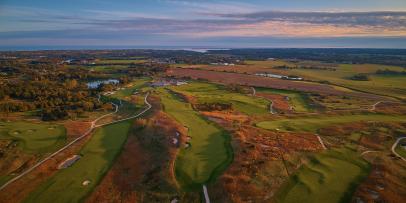
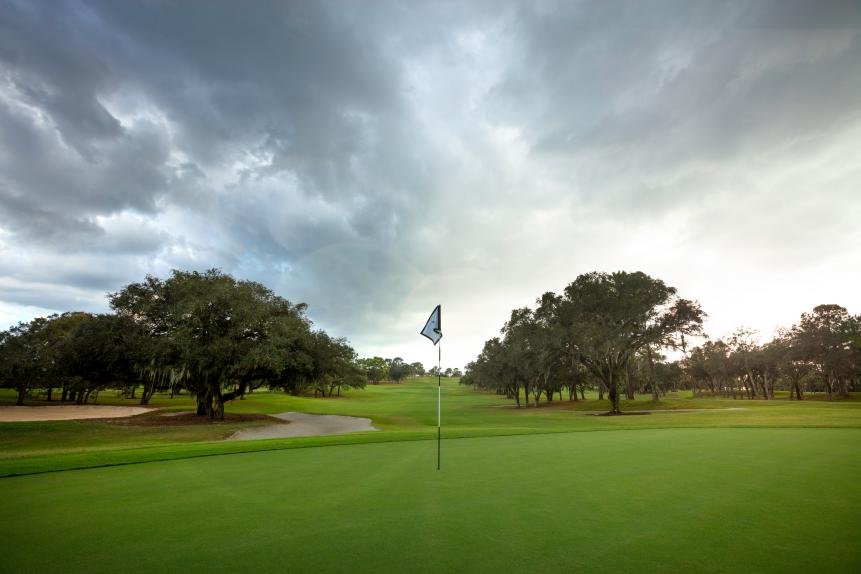
In the 1960s, ‘70s and ‘80s, when more and more Americans relocated to Florida, Sunshine State golf developed a reputation as being somewhat one-dimensional, full of courses strewn through housing developments and wrapped around ponds and palm trees. That certainly exists, in heaping helpings, but there's more variety than meets the eye.

Florida is really several states in one. There are rolling wooded hills in the Panhandle more reminiscent of Alabama. Northwest Florida is flat and dense with unending tracts of pineland. Large sand ridges run from Jupiter to Vero Beach and provide the backbone for esteemed courses including Seminole, Jupiter Hills and John's Island West. South of that is flat, often reclaimed swampland with heavily engineered old courses like La Gorce to Indian Creek, built in the 1920s on artificial islands, to modern marvels like Calusa Pines in Naples strewn atop created ridges. Natural ridges and deep pockets of sand in the central part of the state make the courses at Streamsong and Mountain Lake highly original.

Even though there's more golf in Florida than any other state, there's also more going on than you think. The next five years will be fascinating to see where a new wave of courses just opened or in development land in the rankings, like Apogee Club (with three courses), Tom Doak’s Sandglass, neighboring Soleta and Myakka, The Roost at Cabot Citrus Farms and a half dozen other premium developments from Naples through Panama City Beach.
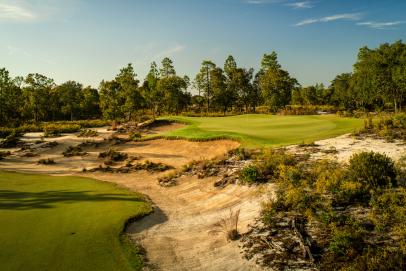
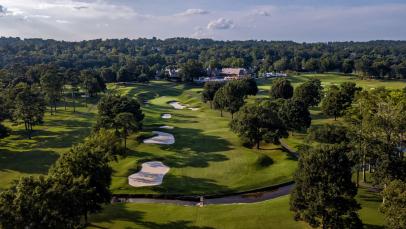
Below you'll find our 2025-'26 ranking of the Best Golf Courses in Florida.

Scroll on for the complete list of the best courses in Florida. Be sure to click through to each individual course page for bonus photography and reviews from our course panelists. We also encourage you to leave your own ratings … so you can make your case for (or against) any course that you've played.

false Private
70. Jupiter Hills Club: Village
Tequesta, FL
Previous rank: 41
While not as dramatic as this club’s Hills Course, the Village Course at Jupiter Hills Club possesses many of the same qualities and quandaries. George Fazio naturally utilized the best features of the club’s property in the late 1960s when he was building the Hills Course, namely the large, cresting ridges of sand on the north side of the site next to Jonathan Dickinson State Park, and the land that was available eight years later when he constructed the Village Course was primarily down in the flats on the south end. The design had to be engaging without the asset of huge elevation changes, and does so with slender fairways with subtle offset movements and small, difficult greens set over deep clamshell bunkers. A 2017 remodel of the greens and bunkers also replaced the Bermuda roughs with borders of open sand to match the dazzling aesthetics of the Hills Course.
View Course
false Public
69. TPC Sawgrass: Dye's Valley
Ponte Vedra Beach, FL
3.8
15 Panelists
Previous rank: 60
There are pieces of TPC Sawgrass Players Stadium Course in the club's second course, Dye's Valley. Behold the pot bunkers and deep grassy basins around greens. See the water hazards lined with bulkheads, and the large mounds bordering many of the holes. The arcing fairways with inside hazards are present too, creating just enough uncertainty on the driving line to make even good players uncomfortable. All of Pete Dye's tricks and trademarks (as interpreted by Bobby Weed) are here with the exception of an island green par 3 (though there's a peninsula green angled over water), just in smaller doses as the routing wends out through a residential section. But it's exactly what's needed for a high-end public club's "second" course--just enough of the top course to whet the appetite, but at a fraction of the price and demand.
View Course
false Private
68. Sara Bay Country Club
Sarasota, FL
3.9
6 Panelists
Previous rank: 59

From Golf Digest Architecture Editor emeritus Ron Whitten:
 

There’s so much to learn about Sara Bay Country Club. Let's start with its history. In his 1927 autobiography, Down the Fairway, Bobby Jones, then 25, (still three years shy of the Grand Slam climax to his golf career) offered one of the more ironic golf course appraisals of all time. "I regard the Whitfield Estates course as one of the best in America," he wrote.


It's ironic for two reasons. First, the course had gone belly up by the time Jones book’ hit bookstores. OK, the book was based on a series of articles previously published in Liberty Magazine, so the course was still viable when Jones first wrote the line.


The course wouldn't be revived until 1937, first as Sarasota Bay Country Club, renamed in 1964 as Sara Bay Country Club. It's also ironic because Jones was on the staff of the firm hired to promote real estate sales around the course, so arguably his was a paid endorsement, although he didn't reveal that at the time. It was certainly a big-time Roaring Twenties operation.


The club hired famed golfer Tommy Armour (who would win the 1927 U.S. Open at Oakmont) as head professional and amateur Perry Adair, of Adair Real Estate was retained to sell homes. Adair made his good friend Jones an "assistant sales manager," with the apparent sole duty of playing promotional golf exhibitions on the course in front of prospective buyers. Despite all the marquee names, the development struggled, and in 1927 Whitfield closed. It was revived 10 years later, briefly as a public course, by digging the course out from under 10 years' growth of shrubbery. Apparently the reclamation wasn't ideal, for a few years before his death, Ross told a reporter that, other than Pinehurst No. 2, Whitfield was as good a course as he'd ever designed, "before the membership messed it up.”

Explore more about Sara Bay Country Club with our complete review here—including bonus photography and ratings from our expert panelists.

View Course
false Private
67. Sailfish Point Golf Club
Stuart, FL
4.1
10 Panelists
Previous rank: NR
Sailfish Point is a unique golf and residential club that occupies some of the most valuable land on the Florida Atlantic Coast. It’s set on an isthmus called Hutchinson Island just north of Jupiter Island between the ocean, the Intracoastal Waterway and the St. Lucie Inlet, connected to land by a narrow causeway. The Jack Nicklaus-designed course, one of his firm’s earliest that opened in 1981, occupies the center of the island, though homes flank most of the parallel-paired holes. The design, fully renovated in 2022, does touch the water with the 14th green set on the shore of the inlet and the 18th “Window to the Sea” green perched above the Atlantic beach, but the best hole might be the 184-yard par-3 12th angled tightly against a marshy canal, a ringer for the brutal 17th hole at The Ocean Course at Kiawah Island though this one came eight years before the other.
View Course
false Private
66. The Country Club of Orlando
Orlando, FL
3.7
15 Panelists
Previous rank: 56
There is some uncertainty whether this course was designed by Donald Ross, as for years it was believed to be. At some point, however, accurate attribution takes a back seat to whether or not the design is of the first rank. In this case, it is. The Country Club of Orlando's routing maximizes every available inch and manages to create distinctive looks and strategies despite a number of holes moving back and forth in the same direction. No matter who first designed it, credit for elevating it into the top percentile of a state with over 2,000 courses belongs to architect Ron Forse, who reworked the holes in 2017.
View Course
false Private
65. Quail West Golf & Country Club: Preserve
Naples, FL
Previous rank: 51
In 1992, Quail West Golf and Country Club premiered two Arthur Hills-designed golf courses aptly titled the Lakes and Preserve. While the partner Lakes course is routed across open landscape and is scattered with manmade ponds and hazards, the Preserve course meanders through thick Florida cypress trees with dense native flora and fauna just off the fairways. The Preserve course is built over subtly sloping terrain featuring tight tree-lined fairways and large sloping greens. The course is best known for its challenging closing stretch, home to the par-3 16th played over water, the long dogleg par-4 17th and the tight par-5 18th played to a green surrounded by water.
View Course
false Private
64. Atlantic Beach Country Club
Atlantic Beach, FL
3.8
8 Panelists
Previous rank: NR
Atlantic Beach Country Club (formerly known as the Selva Marina Country Club until 2014) was designed by Ed Seay and debuted in 1958. Built to exist in congruence with existing native ecology, gentle fairways are routed over existing undulations and feature large bunkers flanked with tall grasses. Since 2007, the club has undergone two significant renovations. The first led by Bobby Weed in 2007 added length and changed grasses, while the second in 2014 headed by Erik Larsen, formerly of Arnold Palmer’s design company, entailed a complete redevelopment focused on adding and redoing bunkers, as well as runoff areas with the goal of creating a more natural and dunesy feel to the course. Now, tight driving windows are guarded by long, snaking waste areas that appear to shrink fairways, and mis-hit iron shots will likely find the penal, tightly mown collection areas just off of putting surfaces.
View Course
false Private
63. The Moorings Yacht & Country Club Hawks Nest Course: Hawks Nest
Vero Beach, FL
4.1
10 Panelists
Previous rank: 43
Located just north of West Palm Beach is the Jim Fazio-designed Hawks Nest course at Moorings Yacht and Country Club. Pete Dye was commissioned to design the shorter Moorings course in 1974, which later partnered with Fazio’s 7,000-yard championship course 13 years later. Hawks Nest is truly unique for Florida golf, as the course is routed over steep undulations with wide fairways guarded by towering sand dunes as well as small and challenging putting surfaces. The front nine is highlighted by the difficult par-4 5th and 6th holes, which play over 450 yards, with the standout on the back nine being the finishing hole featuring a tight fairway pinched by large bunkers and a narrow, well-protected green.
View Course
false Private
62. The Club At Ibis: Legend Course
West Palm Beach, FL
3.6
6 Panelists
Previous rank: 58
Located in West Palm Beach, the Club at Ibis is home to three Nicklaus family-designed golf courses. The championship-style Legends course opened in 1991 and was designed by Jack, who set out wide, sprawling fairways dotted with deep bunkers and lined with snaking water hazards. In classic Nicklaus fashion, risk-reward opportunities off the tee are plentiful, and greens often require precise angles if one wants to attack difficult pin placements. Greens are large but vary in character and size with most surrounded by tightly mown runoff areas that require creativity in one's short game. In 2017, Nicklaus returned to complete an extensive renovation focused on adding length, a new irrigation system, as well as re-grassing fairways and re-contouring greens.
View Course
false Public
61. Old Corkscrew Golf Club
Estero, FL
3.8
14 Panelists
Previous rank: 49
Old Corkscrew, designed by Jack Nicklaus, is routed through the natural landscape of Southwest Florida (no homes!), serving as a habitat for dozens of exotic animals. The challenging layout plays among cypress trees, tall pines and wetlands, demanding accuracy over distance throughout. Though it's 30 minutes northeast of Naples, Old Corkscrew's absence of homes and tranquil setting make it unique in Southwest Florida—and well worth the drive.
View Course
60. Black Diamond Ranch: Ranch
Bill Hornstein
false Private
60. Black Diamond Ranch: Ranch
Lecanto, FL
3.8
13 Panelists
Previous rank: 50
The Quarry Course at Black Diamond Ranch, which once ranked as high as No. 24 on America’s 100 Greatest Courses, dominates the topic of golf at this upscale community club due in large part to four second nine holes that descend dramatically into a massive stone quarry. The Ranch course, built in 1997, 10 years after the Quarry, is more subtle but no less evocative. Visitors are often surprised to see how much elevation change exists in this part of Florida, 90 minutes north of Tampa, but ancient sand ridges give the topography variety to go along with beautiful mature live oak specimen trees. That’s the tapestry of the Ranch, which has the feel of a pastoral stroll, a feeling enhanced after a 2024 renovation by architect Tripp Davis.
View Course
false Private
59. Hammock Beach Golf Resort & Spa: Conservatory Course
Palm Coast, FL
3.9
12 Panelists
Previous rank: 52

Hammock Beach is a Golf Digest Editors' Choice award-winning resort in Florida and has two of the best public courses in Florida: The first being the Tom Watson-designed Conservatory course, which is more inland than the Jack Nicklaus-designed Ocean course. The Conservatory course is not your typical Florida resort course—its rocco architecture is infused with British links-style features including steep mounding throughout and boasts elaborate stone work, waterfalls, streams, marshes, deep pot bunkers, waste areas and wave-like greens.

View Course
false Public
58. Tiburon Golf Club: Gold
Naples, FL
4.2
5 Panelists
Previous rank: 55
Of the public options sprinkled across Naples, Greg Norman's Tiburón courses at the Ritz-Carlton provide the best balance of quality golf and convenience, situated in the heart of North Naples. That ideal combination comes at a cost, though, as green fees can be upward of $300. The Gold course—ranked on our Best Courses You Can Play in Florida list—features stacked sod wall bunkers and no conventional rough and is home to the LPGA’s CME Group Tour Championship and the PGA Tour’s QBE Shootout.
View Course
false Private
57. Seminole Legacy Golf Club
Tallahassee, FL
4.4
8 Panelists
Previous rank: NR
Seminole Legacy, the home course for the Florida State golf teams, can stretch to 7,800 yards, but begs the question: Is that even long enough? It's far more apt for today's collegiate players than the former 7,100-yard layout from 1962. The course underwent a full-bore $10 million remodel in 2019 by Nicklaus Design with Jack Nicklaus II leading the project. The new design somehow managed to reconfigure nearly every hole—switching directions, creating new green sites—while staying respectful of the original hole corridors and particularly the mature pines and live oaks that outline avenues across the property. Florida has a repuatation as a flat state, but that's not true in the northwest panhandle around Tallahassee and westward as evidenced by sites like this one with lovely rise and fall. That means Seminole Legacy retains a sense of established gentility infused with contemporary bunkering and slick, smooth-shouldered greens that do more than enough to challenge the game's best amateurs.
View Course
false Private
56. The Club At Mediterra: South
Naples, FL
4.1
4 Panelists
Previous rank: 57
Located in Naples and styled after the Mediterranean countryside is the idyllic Club at Mediterra. The club is home to two courses designed by Tom Fazio, the South and North, which opened in 2000 and 2002, respectively. The courses are known for their environmentally friendly designs, with the South course incorporating vast stretches of natural preserves and existing wetlands into the layout, often bordering fairways or protecting putting surfaces, creating dramatic approaches and intimidating tee shots. Tom Fazio made significant renovations to the course in 2015, renovating bunkers, adding new irrigation systems and regrassing fairways and greens. Improvements to tee shot strategy can be seen at the dogleg par-5 seventh, with bunkers shrinking the fairway landing zone and a hazard bordering the entire right side of the hole.
View Course
false Private
55. Golden Ocala Golf & Equestrian Club
Ocala, FL
3.8
11 Panelists
Previous rank: 48
When Ron Garl designed Golden Ocala in the 1980s, it was believed to be golf's first tribute course. Located in the horse country of live oaks and gentle hills surrounding Ocala, an hour northeast of Orlando, the original 18 possessed holes that Garl designed but others that were approximate replicas of famous holes from around the world including Augusta National's 12th and 13th holes, a version of the Road Hole complete with a stone wall at the corner, the par-3 fourth at Baltusrol, the par-4 third at Oakmont, just to name several.
View Course
false Private
54. La Gorce Country Club
Miami Beach, FL
4
5 Panelists
Previous rank: 46
La Gorce was among the first wave of golf courses built in Southeast Florida during the 1920s. Like neighbors Indian Creek and Normandy Shores, it and its surrounding real estate development were created with material dredged from its site on Biscayne Bay, a major engineering endeavor at the time. The club turned the course over to the city following World War II, and in the 1950s, Robert Trent Jones initiated a major renovation to bring it in line with modern tastes and demands. The course has continued to evolve and change. Jack Nicklaus remodeled the course in the 1990s, and it continues to make improvements going forward.
View Course
false Private
53. Shark's Tooth Golf Club
Panama City Beach, FL
4.1
9 Panelists
Previous rank: 44
Shark's Tooth fits nicely into the oeuvre of Greg Norman's Florida work. The course is located on the banks of Lake Powell just west of Panama City Beach and east of Highway 30A, with five holes that play along the marshy shore. Its design features the Shark's trademark wall-to-wall fairway cut, bright white bunkers that jut into the line of play, crushed coquina shell transition areas and slick-shouldered greens that fade into close-cropped chipping swales.
View Course
false Private
52. The Gasparilla Inn & Club
Boca Grande, FL
4.2
7 Panelists
Previous rank: 47
Open to members and guests of the resort, Gasparilla Golf Club sits on an island near the picturesque coast of Charlotte Harbor. Though it perhaps lacks the overall ambiance and seriousness of the architecture, the proximity of the design to the water (five holes run directly along the island’s shore) and the exposure to the coastal winds puts Gasparilla in the same category of other Pete Dye seaside courses like Teeth of the Dog and The Ocean Course at Kiawah Island. Dye revamped an old 1930s-era course here in 2002, making it his own, though time, weather and other modifications over the last 20 years muted much of that character. Now Tripp Davis has attempted to bring back the overall Dye composition while making adjustments in certain places including shifting greens and fairways, planting new grasses and shortening some holes while lengthening others by as much as 40 years. The constant is the unique location and water views.
View Course
false Private
51. Timuquana Country Club
Jacksonville, FL
4.2
14 Panelists
Previous rank: NR
Located in Jacksonville on the western shore of the mighty St. Johns River, Timuquana is the kind of quiet, upscale neighborhood club they don’t make anymore. The large white southern Colonial-style clubhouse overlooks the broad river and swimming complex on one side and the 1923 Donald Ross design on the other amid a tranquil, undeveloped 300-acre parcel of pine and palmetto. The design makes up for northwest Florida’s scant elevation change by tightening the scoring demands the closer players get to greens that are angled and offset by bunkers and surrounding chipping areas. Over the years, a number of architects have renovated the design including Robert Trent Jones and Bobby Weed, but it’s the ongoing work of Bruce Hepner that’s brought out the best version of Timuquana through extensive pine thinning, fairway line adjustments, bunker restoration and the establishment of native sand barriers around the fairways and greens reminiscent of the transitions at Pinehurst No. 2. Timuquana is one of the most underrated courses in the state and the kind of walkable course you’d want to play every day.
View Course
false Private
50. The Pelican Golf Club
Belleair, FL
3.3
3 Panelists
Previous rank: NR
Pelican Golf Club sits on the site of the old Belleview Biltmore Resort golf course, not to be confused with Belleair Country Club’s two 18-hole courses that sit adjacent to the old Belleview Biltmore Hotel. The resort course, located a block south of the hotel campus, was a 1925 Donald Ross design that had been remodeled several times over the years. It closed in 2017, and the land was purchased by a new owner who turned it into a private club and hired Beau Welling to redesign the property. The land is flat, but the architecture effectively uses fairway bunkers and small, elevated greens to create strategic avenues. Pelican is the host of the annual LPGA’s ANNIKA driven by Gainbridge tournament.
View Course
false Private
49. Emerald Dunes Club
West Palm Beach, FL
3.2
3 Panelists
Previous rank: 45
Emerald Dunes was developed as a high-end public course. Now it's one of the most sought-after private courses in the Palm Beach market with initiation fees to match. The design weaves around a series of lakes, and water or marshes come into play on nearly every hole. Knowing that the lakes would be so prevalent, team Fazio played up the "aquatic theme," as he calls it, carving scalloped edge banks and nurturing native plants along the shorelines.
View Course
false Private
48. Hammock Beach Golf Resort & Spa: Ocean Course
Palm Coast, FL
4.1
11 Panelists
Previous rank: 42
This scenic Jack Nicklaus-designed South Florida track has six holes that play along the Atlantic Ocean, with a challenging four-hole finishing stretch nicknamed “The Bear Claw.” The course, which hosted the 2003 U.S. Women's Amateur Public Links, is one of two at the resort and features a classic Nicklaus design: generous fairways and well-protected greens.
View Course
false Private
47. Boca Rio Golf Club
Boca Raton, FL
4.4
7 Panelists
Previous rank: 40
In 1967, the Boca Rio Golf Club unveiled a Robert von Hagge-designed golf course set on 200 acres of Florida wilderness completely devoid of housing developments. The challenging yet understated golf course gently twists through dense thickets of native trees, giving an aura of tranquility. The course is known to be challenging, with slick putting surfaces often defended by three or more bunkers requiring precise approaches. The course is highlighted by the par-3 17th, played to a green surrounded by water on three sides. In 2017, Ron Forse led a renovation of greens, tee boxes and bunkers ahead of the club hosting the Gainbridge LPGA event in 2020 and 2022.
View Course
false Private
46. Camp Creek Golf Club
Panama City Beach, FL
4.1
10 Panelists
Previous rank: 34
Located along the popular and stylish Highway 30A section of northwest Florida, Camp Creek is available to play for guests staying in the WaterColor and WaterSound communities. An underated course in the Fazio portfolio, the design explores several ecosystems including a sand and dunes section near the breezy Gulf Coast, holes that play around a series of internal lakes and a forest loop on the northside of the property with some of the course's best holes, including the reachable par-5 12th with a centerline bunker awaiting second shots, the short par-4 13th playing up to a tabletop green, the gorgous downhill par-3 14th nestled against water and the long, stout par-4 15th with a large, wavy green.
View Course
false Private
45. Quail Valley Golf Club
Vero Beach, FL
4
5 Panelists
Previous rank: 36
Set on an old citrus grove in Vero Beach, Quail Valley Golf Club opened in 2001 under the collaborative design of Tom Fazio II and Nick Price. The course boasts an adventurous layout utilizing the land’s slopes and undulations, along with expansive water hazards in play on 13 holes. Open driving zones are visually shrunk by bunkers and hazards, while putting surfaces have tricky slopes that feed into difficult runoff areas. The best of Quail Valley is on display during the finishing stretch, which features the long par-3 16th with water in the backdrop, the dogleg par-4 17th hugging the nearby lake and the uphill par-4 18th that plays up to the stunning Hamptons-style clubhouse.
View Course
false Private
44. The Grove XXIII
Hobe Sound, FL
3.8
5 Panelists
Previous rank: NR
The golf world couldn’t wait to find out more when word got out in 2020 that NBA legend Michael Jordan had opened his own golf course in Florida, less than ten miles from his former club, The Medalist. Called The Grove XXIII (for the number Jordan wore through most of his career), the course seemed exotic and intriguing: a private retreat for Jordan and his buddies (including athletes from other realms), built on a bare bones parcel of agricultural land by Bobby Weed with one of the most technologically advanced practice facilities in the U.S. The design was equally inventive with holes that cross over so they can be played in shorter loops and routing configurations, full of half-par 4s and 5s to stimulate action in the high stake matches constantly being waged. Five years later The Grove XXIII design remains fresh, but the concept of a new course in these parts less so. The neighborhood has exploded with McArthur’s Back Yard by Bill Coore and Ben Crenshaw just to the east, Apogee Club’s three 18-hole courses down the road, Tom Doak’s Sandglass just beyond that, the new 36-hole development called The Ranch across Highway 76 from Apogee now getting underway and Discovery Land Company’s Atlantic Fields literally outside the doorstep. Hobe Sound is has become ground zero for premium golf development in Florida, but as has been so often the case in his life, Jordan set the standard and did it in a way no one else can replicate.
View Course
false Private
43. Coral Creek Club
Placida, FL
4.1
9 Panelists
Previous rank: 32
Coral Creek is a low, slinky Tom Fazio design set in a pristine section of nature on the mainland side of Gasparilla Sound near Boca Grande. There are no homes or other development around the club, just pure golf with holes that slide through a series of interior lakes and open sandscape buffers. Fazio completed a remodel of the course in 2020 that addressed drainage issues, revamped the bunkers and installed SubAir systems beneath each green.
View Course
false Private
42. Orchid Island Golf Club
Vero Beach, FL
3.8
4 Panelists
Previous rank: 31
Orchid Island, a cozy luxury development with home lots and villas stretched along a span of Atlantic Ocean beaches on a barrier island north of Vero Beach, features a 1990 Arnold Palmer design that winds through the community. This is Palmer at his most PGA Tour-level exacting, setting up hole after hole that dogleg around ponds and rock-wall lined lagoons, with 12 greens requiring full carries over water or small putting surfaces positioned directly against the lakes with no room to miss including the 18th with a version of the approach at the 18th at Bay Hill, ranked six spots ahead at No. 36. Orchid Island, which shares a property line with Windsor Club, underwent a greens and bunker renovation in 2023.
View Course
false Private
41. Belleair Country Club: West
Belleair, FL
4.3
11 Panelists
Previous rank: NR
The history of Belleair in the resort community of the same name, 25 miles west of Tampa on the Gulf of Mexico, mirrors that of many historic clubs that trace their ancestry to the turn of the last century. Its first rudimentary holes were laid down by amateurs in the waning years of the 19th century and then gradually added onto over the next decade, crudely, before an expert was brought in to straighten everything out. In this case, Donald Ross, who revamped the by-then 18 and added another course to the east. Ross returned in the 1920s to take a second turn at revisions based on another decade of experience designing courses across the U.S. Others visited through the years to put their own tweaks on the West Course, and by 2020, Belleair had little distinguishing pedigree.The club hired Jason Straka and Dana Fry to revamp the course using original Ross sketches to rebuild the holes. While the architects, Straka in particular, adhered to the historic source material as closely as possible, it’s more accurate to describe Belleair as a new course built in the style of the old. Large portions of the site were regraded, and several large irrigation ponds were filled. The majority of trees were removed to enhance views out to Clearwater Harbor, and the rugged streams that once laced through the course were reconstructed. The first three holes were re-routed, and a new par-3 seventh was added with a green on a peninsula jutting into the bay. To accommodate the extra hole, the old par-3 12th was eliminated, leaving space for what are now the 10th, 11th and 12th to be extended to the east. Among the radical changes, views and provocative bunkering, the most impressive move might be the subtle shifting of the sixth fairway to the right so it runs hard against the length of the seawall, creating a straight-line and frightening strategic hazard.
View Course
false Private
40. Lost Tree Club
North Palm Beach, FL
3.8
3 Panelists
Previous rank: 39
Located one step south of Seminole, the 12th-ranked course in the U.S., this Jack Nicklaus design is the centerpiece of an upscale development with the course set two lots in from the Atlantic Ocean. Lost Tree is a Nicklaus remodel of the 1960 Mark Mahannah design of the same name that was lifted out of a mangrove swamp, one of the region’s first comprehensive golf and real estate developments with homes land-planned around the golf holes, or more accurately, the golf planned around the homesites. The routing hasn’t changed, but the bunkering, shaping and luxury presentation of the golf has undergone a considerable upgrade, a must given the competition in the zip code.
View Course
false Private
39. The Loxahatchee Club
Jupiter, FL
4.4
2 Panelists
Previous rank: 35
Loxahatchee was a product of its time when it opened in the 1980s. Jack Nicklaus studded it with "Scottish" chocolate-drop mounding around greens and fairways that was all the rage as architects began riffing on the shapes Pete Dye was building. That kind of thing soon went out of style, and most of those features have since been removed from Loxahatchee. What's left behind is less dated but nevertheless a quintessentially Florida 1980s-style penal design with 14 holes that have water in play, including the possibility of rinsing your ball hitting into at least 11 greens.
View Course
false Private
38. PGA National Resort & Spa: Champion
Palm Beach Gardens, FL
4
21 Panelists
Previous rank: 38
One of five courses at PGA National, the Champion Course hosts the Honda Classic every year. Originally designed by Tom and George Fazio for tournament play, Jack Nicklaus redesigned the course in 2014, creating the infamous three-hole stretch aptly named "The Bear Trap." Routinely one of the toughest courses on Tour, The Champion is a true ball-striking test.
View Course
false Private
37. Innisbrook Resort: Copperhead
Palm Harbor, FL
4.2
11 Panelists
Previous rank: 37
The Copperhead course is most famous for hosting the PGA Tour's Valspar Championship every April, but Innisbrook is home to three more championship courses—Island, North and South—with views more like the sand hills of the Carolinas than you might expect in Florida. The Copperhead course is a tough ball-striking challenge with tight, tree-lined fairways and a demanding three-hole finish—known as the Snake Pit—that often makes for dramatic finishes to the annual PGA Tour stop.
View Course
false Private
36. Arnold Palmer's Bay Hill Club & Lodge: Challenger/Champion
Orlando, FL
4.1
24 Panelists
Previous rank: 33

From Golf Digest Architecture Editor emeritus Ron Whitten:

I've always been fascinated by the design of Bay Hill, Arnold Palmer's home course for over 45 years (although Tiger Woods owns it, competitively-speaking, as he's won there eight times.) For one thing, it's rather hilly, a rarity in Florida (although not in the Orlando market) and dotted with sinkhole ponds incorporated in the design in dramatic ways.
 

I always thought the wrap-around-a-lake par-5 sixth was Dick Wilson's version of Robert Trent Jones's decade-older 13th at The Dunes Club at Myrtle Beach. Each of the two rivals had claimed the other was always stealing his ideas. But the hole I like best at Bay Hill is the par-4 eighth, a lovely dogleg-right with a diagonal green perched above a small circular pond. OK, I admit that it reminds me of the sixth at Hazeltine National, another Trent Jones product, but I don't think Wilson picked Trent's pocket on this one, as both courses were built about the same time, in the early 1960s.I should pause here to point out that I have always given credit to Wilson (who died in 1965, four years after it opened) for the design of Bay Hill, going all the way back to the book I co-authored with Geoff Cornish, The Golf Course, first published in 1981. But the authorship of Bay Hill has been contested, and therein lies a story.

It starts with a call I received in late 1983 from Thomas F. Barnes, Jr., a Florida real estate developer, who saw my book and called to tell me that I had it wrong. Dick Wilson didn't design Bay Hill, Barnes said. He designed it, and Wilson merely reviewed his design, suggested a change and loaned him an associate, Bob Simmons, to construct the course.

Explore more about Bay Hill with our complete review here—including bonus photography and ratings from our expert panelists.

View Course
false Private
35. RedStick Golf Club
Vero Beach, FL
4.2
6 Panelists
Previous rank: NR
RedStick falls into the “off the grid” category. The walking-only club in Vero Beach was founded in the late 1990s by a group of players frustrated by the dearth of attractive and available club options in the region. They filled the small membership early on and saw no need to seek further publicity—in fact, very few Golf Digest panelists have seen it, with only just enough now for RedStick to qualify for the Best in State ranking. Built on a sand crest sitting almost 40 feet above sea level despite being just 1,200 yards from the Intracoastal Waterway, the mostly open-vista Rees Jones-design has small, elevated greens with fluid bunkers swept up into the edges and a second nine that detours through a preserve of Loblolly and slash pine.
View Course
false Private
34. Hammock Dunes Club: Creek
Palm Coast, FL
4.3
3 Panelists
Previous rank: 30
This design, one of two stellar courses at this club in Palm Coast and one of Rees Jones' favorites, is set in the dark interior of the Intracoastal Waterway marshes and plays like an animal leaping from one dry place to another over stretches of wetlands. Not for the faint of heart or weak of swing, it was an extreme effort to build and locate enough land to support golf, and the design roams far and wide to find what's needed. But the journey is worth the effort due to holes like 13, 14 and 15 that feel like dancing on a highwire over the marsh, the latter hole being a gambling go-for-broke short par 4. Each of the par 3s, particularly seven, 12 and 16, require unflinching shots over swamp or water, with miss-hits reaching into the pocket for another ball.
View Course
false Private
33. Lake Nona Golf & Country Club
Orlando, FL
4.3
11 Panelists
Previous rank: 53
Lake Nona is a mid-1980s solo Tom Fazio design, built not long after his uncle and former design partner, George Fazio, stepped away from the business before his death in 1986. Named after an adjacent body of water just east of Orlando International Airport that borders the entire left side of the 18th hole (two other holes touch neighboring Buck and Red Lakes), the design was originally carved through central Florida jungles of pine, cypress and palmetto with attractive holes buffered by lagoons and exposed washes of sand. Over the last 30 years, a premium real estate development has filled in around it, one of the most upscale in the Orlando market. Today, Lake Nona is known as much for its PGA- and LPGA-heavy membership and homeowners as for what remains a wonderfully modest and pared-down early-period Fazio design.
View Course
false Private
32. High Ridge Country Club
Lantana, FL
4.3
3 Panelists
Previous rank: 29
Designed by Joe Lee on the eve of the South Florida golf boom of the 1980s, this private club between Lake Worth and Boynton Beach feels like an oasis amid the noisy urban sprawl. The core course has no home development around it and is buffered from the surrounding neighborhoods by canals and forest buffers. Lakes and lagoons come into play on 11 holes, and a renovation by South Florida specialist Kipp Schulties brought out the vibrancy of the holes and a more playful, sweeping mode of bunkering.
View Course
false Public
31. The Park at West Palm Beach
West Palm Beach, FL
Previous rank: NR
In the current age of new elite private clubs and faraway destination resorts, the opening of a public municipal-affiliated golf course in an urban area is major news—especially when Tiger Woods shows up for the grand opening, like he did in March 2023. The Park is the latest in a growing trend of public/private partnerships that have fueled the redevelopment of numerous municipal courses around the country. The new course is set on the site of the former Dick Wilson-designed West Palm Beach Golf Course, one of the first notable designs of the post-World War II years when it opened in 1947 and long considered among the top municipal courses in the country.That course closed in 2018 due to deteriorating playability and diminished interest and sat fallow for several years. Several plans for different uses of the land were proposed before a group of local citizens, led in part by Seth Waugh, CEO of the PGA of America, raised $56 million in individual donations to re-imagine the property as a community gathering space with amenities that include, in addition to golf, youth activities and educational programs, shopping and dining. Woods was one of the donors. (Note: the PGA of America is not connected to the project.)The fundraisers and City of West Palm Beach hired Hanse and Wagner to create a new 18-hole course on the property’s existing site, located just off I-95, less than two miles south of the Palm Beach International Airport. Also included in the redevelopment is a state-of-the-art practice facility, a lighted nine-hole short course and a two-acre children’s-only golf zone.Hanse and Wagner retained nothing of the Wilson course and originally envisioned using its deep, sandy terrain to craft holes that would look and play like the Sand Belt courses of Melbourne, Australia. In routing the course, however, they removed pockets of trees, palmetto and other vegetation—crucial ingredients of Sand Belt courses—that would have enhanced that effect.“There are certain parts of the golf course where you get that Sand Belt feel—I hear the comparison a lot on 11, the par 3, and No. 6, the short par 4—but as Jim and I started to go through it we discussed how we were going to differentiate this golf course from some of the other things we’d done,” Hanse says. “We started to move away from the Sand Belt look and go more toward exposed sand areas because of the scale and width that we had.”The width, exposure and sightlines that were created once the land was cleared came to define the design’s concept, specifically fairways of enormous breadth, greens that are shaped or oriented to receive shots from specific points in the fairways, and highly contoured putting surfaces.“One of the cool things Tiger said when he was here, and he’s been by a few times, was this is a ‘one-ball course’—you’re not going to lose a ball out here,” Hanse says.Read Derek Duncan's full piece here.
View Course
false Public
30. Trump National Doral: Blue Monster
Miami, FL
Previous rank: 27
The linchpin of the famous four-course complex previously known as Doral Golf Resort, the Blue Monster had hosted a PGA Tour event annually from 1962 to 2016. The fearsome layout was designed by Dick Wilson in 1962 and set the template for the modern south Florida course with lakes galore, deep bunkers and greenpads elevated above the fairways for drainage and aerial target golf. Several questionable renovations in the 1990s and early 2000s moved it away from the original Wilson look, and the design was lost for a period of time. Always intended to be a course presenting shot-making demands for good players, the Blue Monster was given added bite by Gil Hanse and Jim Wagner through the creation of new slopes and ridges on several holes and the excavation of new lakes on the par-3 15th and drivable par-4 16th to add more excitement to the finish. They wisely left the legendary 18th nearly untouched. Why mess with history? The changes were completed shortly before the PGA Tour took the course out of its annual location. Now in 2026, Trump National Doral will reenter the tour's rotation with the Cadillac Championship coming to Miami two weeks before the PGA Championship.
View Course
false Private
29. The Dye Preserve Golf Club
Jupiter, FL
4.3
14 Panelists
Previous rank: 28
As far as Jupiter-area courses go, The Dye Preserve is a bit off the beaten path, nearly 10 miles inland and west of I-95. The Pete Dye design has many of the late architect’s defining features, including railroad tie-lined water hazards, deep pot bunkers, teardrop mounding and intimidating sightlines. With the tips nearly reaching 7,300 yards and course rating just shy of 76, the course is a stern test. Like many Jupiter courses, PGA Tour and LPGA Tour players are members at The Dye Preserve.
View Course
false Private
28. Floridian National Golf Club
Palm City, FL
4.2
3 Panelists
Previous rank: 24
The bunkering at Floridian National distinguishes it from many of the other uber-private Southwest Florida courses. Between the bright white sand and clamshell shapes, with softly rising tall lips, the bunkers share many similarities to those at Augusta National. They play an integral role in the strategy at this 7,100-yard Gary Player design, as they often pinch in where longer players would be landing off the tee. The long par-4 18th is a strong finisher and roughly resembles the famous closers at TPC Sawgrass and Pebble Beach, with the hole boomeranging to the left as water runs up the entire length of the hole. Floridian is a popular practice spot for many pros, and Claude Harmon III, Butch’s son, is the Director of Instruction.
View Course
false Private
27. Trump National Golf Club Jupiter
Jupiter, FL
4.6
4 Panelists
Previous rank: 23
Trump bought the Ritz-Carlton resort in 2012. Its Jack Nicklaus design is one of a number of quality courses in the area—including the Bear's Club down the road and the Floridian.
View Course
false Private
26. Old Marsh Golf Club
Palm Beach Gardens, FL
4.3
4 Panelists
Previous rank: 26
Pete Dye was as proficient and prolific as any designer who ever lived at building golf courses in swamps, but the job at Old Marsh was particularly intense. Dye said the marshes and grasslands of the 440-acre site set inside a nature preserve between Jupiter and North Palm Beach reminded him of Africa, and it took years to get all the wetland setbacks authorized and the construction permitted. Old Marsh is indeed like a tour through a sanctuary, with the holes forming a continuous string of isolated land paths guiding players through a network of marshland, some natural and others developed by construction crews. The course is more low-profile than many Dye designs built in the 1980s in order not to interfere with the surrounding views and to encourage a bump-and-run style of play. The exception is the short par-4 fifth, Dye’s oft-repeated version of the Alps hole that demands players hit a blind approach over a two-story mound in front of the green.
View Course
false Private
25. Loblolly
Hobe Sound, FL
3.8
5 Panelists
Previous rank: 22
Situated on a tight, triangularly shaped property about a mile from the Atlantic Ocean in Hobe Sound, Fla., Loblolly is a challenging Pete and P.B. Dye design. Angles are key at Loblolly, as many of the narrow and tilted greens are best attacked from one side of the hole. The Dyes were ingenious when they built the course in the late 1980s, using excavated sand from the retention ponds to create rambling fairway movement and 40-foot-high dune ridges on which to place greens and separate holes. The same concept was later used by architects at Calusa Pines, McArthur and other South Florida courses, but Dye did it at Loblolly first. Highlights include the double-dogleg eighth with a huge bi-level green banked against water, the drivable par-4 13th, where the green is nestled in a sandy cove behind sentry pines, and the par-4 14th, a standout version of Dye’s Alps hole with the green obscured by a large ridge. The par-3 16th is one of the more dramatic holes in the region, as any shot coming up short and right will filter down into a bunker 20 feet below the putting surface. Golf course builder Jim Urbina, who worked for Dye in the 1980s, completed a full refurbishing of the course in 2023, painstakingly restoring the craft and details of the original design that had faded through the years.
View Course
false Private
24. Isleworth
Windermere, FL
4.8
6 Panelists
Previous rank: 21
Perhaps best known for its membership that includes numerous professional golfers, Isleworth is an exclusive private club in the Orlando area. Tiger Woods lived adjacent to the driving range and spent much of his practice time at Isleworth in the mid-2000s. The course was originally designed by Arnold Palmer in the mid-1980s, but Steve Smyers led a significant redesign in 2004 that lengthened the course and made it more challenging. The course traverses rolling terrain and has a challenging set of green complexes with plenty of movement. Trees line most holes, most notably at the long par-3 second, where overhanging limbs on both sides create a claustrophobic corridor playing to a long, narrow green. The 2014 Hero World Challenge was played at Isleworth, where Jordan Spieth lapped the field just months before his historic 2015 campaign.
View Course
false Private
23. Indian Creek Country Club
Indian Creek Village, FL
4.4
10 Panelists
Previous rank: 25
Indian Creek was built in 1930 on an island north of Miami Beach, created with sand dredged from Biscayne Bay. William Flynn designed the course at the center of the island with estate homes ringing the perimeter along the water—the massive Mediterranean-style clubhouse opens toward a heroic, unimpeded southern view of downtown Miami. Over the decades drainage issues arose, and a renovation by Flynn's former associate Dick Wilson along with other incremental tinkering, had taken the shine off the original architecture. A 2022 rebuild by Andrew Green corrected the drainage problems, leaving a dry and racy design with fairways that rise into elevated greens and banks left and right around bunkers that more closely resemble what Flynn originally designed. The standout hole has always been the long par-3 12th playing from a high tee over a cove of water and field of bunkers, but the short par-4s at four and 13 that also play along an inlet of Biscayne Bay called Indian Creek Lake are just as scenic and more thought-provoking. The par 5s at nine and 11 are also worthy of accolades, each gliding into greens situated on panoramic high points. Green's reconstruction of Indian Creek earned second place in the Golf Digest 2023 Best Renovation awards.
View Course
false Private
22. Black Diamond Ranch: Quarry
Lecanto, FL
4.2
27 Panelists
Previous rank: 18
Black Diamond Ranch is located in out-of-the-way hill country of central Florida, some 30 miles southwest of Ocala. Part of a residential development, this Tom Fazio fantasy-come-alive features a front nine that runs up and down 60-foot-high sand hills and alongside natural sand dunes. But it’s the back-nine stretch through an old rock quarry, holes 13 through 17, that’s the real draw. You start with a par 3 over a pit, then skirt along the rim of a bigger quarry, then descend 85 feet of steep limestone cliffs to the 15th green, positioned astride a bottomless pit of lake, then emerge for more shots along the edge, then shoot down into the smaller pit to the 17th green before finishing on a conventional 18th. Black Diamond has as many twists and turns as a hard-boiled detective novel. Traditionally a private club (there are a total of 45 holes on property), Black Diamond now offers on-site accommodations and stay and play packages.
View Course
false Private
21. Pine Tree Golf Club
Boynton Beach, FL
4.3
13 Panelists
Previous rank: 19
Pine Tree might have been one of Dick Wilson's most intellectual designs. At other places, like NCR and Coldstream in Ohio, or Deepdale and Meadow Brook in New York, he had beautiful, uncompromised land to work on with mature trees and gentle movements. Pine Tree was vacant of nearly any defining feature other than flat Florida scrub, and everything there had to be first imagined, then built. The holes circle the site in coupled pairs, touching numerous lakes and canals. Wilson's bunkers, over 120 of them, their depth and zagged edges recently restored by Ron Forse and Jim Nagle, set up play, defending prime fairway positions and forcing acute aerial approaches into deep, strongly defended greens. Playing Pine Tree is equal parts visual treat and tactical exam.
View Course
false Private
20. Pablo Creek Club
Jacksonville, FL
4.5
6 Panelists
Previous rank: 20
Pablo Creek near Jacksonville is what might be considered a "quiet" Tom Fazio design. The low-publicity golf-only club, built for a discerning owner in the mid-1990s, sits along an eponymously named river on the edge of a vast preserve of swamps and wetlands near the Intracoastal Waterway. The low-profile holes slink through carved corridors of flat pines and along the edges of marshes and lagoons with abrupt shoulders of turf built up over bunkers and waste areas to create relief. Scoring requires straight hitting and a deft short game, as hitting the small, elevated greens is anything but easy.
View Course
false Public
19. Cabot Citrus Farms: Karoo
Brooksville, FL
Previous rank: NR
When arriving at Cabot Citrus Farms you’ll understand why Ben Cowan-Dewar sought this property for decades. A prehistoric ridge in Brookville, Fla., created rolling topography on sandy soil—a golf developer’s dream. In the early 1990s, World Woods opened with two acclaimed public courses and what was once the world’s largest driving range that hosted Tiger Woods commercial shoots. But playing conditions had deteriorated at World Woods. Its Pine Barrens course, once the 75th-best course in Golf Digest's ranking of America’s 100 Greatest Courses, quickly fell off that list in 2013. Cowan-Dewar inquired about the property with the previous owner, Japanese businessman Yukihisa Inoue, in 2014 and 2016, to no avail. Others also tried to buy it. Finally, as COVID-19 restricted travel, Cowan-Dewar chatted with Inoue through translators over Zoom and negotiated to purchase the property in 2021—giving his burgeoning Cabot resort and real estate empire its first U.S. offering.That decades-long courtship has now paid off with Cabot Citrus Farms’ Karoo course, which opened this winter. Kyle Franz—known for his meticulous remodeling of North Carolina Sandhills courses such as Mid Pines, Pine Needles and Southern Pines—transformed the existing Pine Barrens course with Karoo, the first course to open. He reversed playing corridors in some cases, completely changing what was in the ground in many cases. You see that immediately on the first hole—a massive double green for the first and sixth holes. Franz dubs this design style as “adventure golf.” Eleven holes boast double fairways—and the 18th has a triple fairway. “George Thomas was doing massive double fairways 100 years ago,” Franz explains. “So this was a really fun way to make people think a little differently while still staying rooted in good, classical architecture.”The modern trend of pushing width and options is amplified with “super width” here, with some fairways over 100 yards wide, though strategy is still present—as large, exposed sand hazards often split the playing areas. Choosing the ideal side of the fairway will often open up an easier approach. —Stephen HennesseyFor a complete review of the newly opened Karoo course, click here.
View Course
false Private
18. Old Memorial Golf Club
Tampa, FL
4.2
22 Panelists
Previous rank: 16
Architects occasionally get to renovate courses they've built as their design ideas evolve or in response to changing conditions or technology. Donald Ross most famously added to and remodeled Pinehurst No. 2 throughout his life, and Pete Dye tinkered and enhanced courses like Crooked Stick, TPC Sawgrass and Harbour Town (not always for the better). Steve Smyers had the same opportunity to make important adjustments to Old Memorial in Tampa in 2020. In the 22 years since it opened, Smyers had come to think differently about strategy and how elite players approach the game, enticing him to expand greens and make tweaks to the approaches and surrounds. What hasn't changed are the decorative bunkers that take inspiration from the courses of the Melbourne Sand Belt that Smyers is so fond of.
View Course
false Private
17. John's Island Club: West Course
Sebastian, FL
4.4
14 Panelists
Previous rank: 15
John's Island West was one of the last courses Tom Fazio and his associates completed as they were getting into the thick of building Shadow Creek in Las Vegas. In that regard, the course fittingly marks an end to an early Fazio phase, one before it became increasingly clear to him that, for the skills of he and his staff to be maximized, the project's budget and ambition were more critical than having strong natural assets to work with. John's Island, like Jupiter Hills an hour south, did have strong natural assets, namely a series of sand ridges, some up to 50 feet high, that were used to prop up a number of greens and tees. This provided attractive views, tough targets, and much-needed relief amid a site thick with dense undergrowth. Several lakes were excavated for added fill and the surfaces of the course were cut and molded with sandy finger-like transition areas and bunkers, but the overall feel of the course is calm and not engineered. It's a wonderful snapshot of a creative use of existing land, one burnished further by Fazio's 2022 renovation.
View Course
false Private
16. Naples National Golf Club
Naples, FL
4.3
7 Panelists
Previous rank: 17
You might consider Naples National a test run for Calusa Pines. Built eight years earlier by the same team of architects, Michael Hurdzan and Dana Fry, on a site nine miles away, Naples National occupies a similar type of vegetated, swampy, non-descript land requiring significant enhancement to make it work. Excavated lakes provided material to create topographical interest, sandscapes and alluring landscaping, just on a smaller scale than at Calusa Pines, where a similar approach would create a large dune system 60 feet high that holes could run up and down. Though more modest in scale and elevation change, Naples National is just as unique. A thick layer of coral rock beneath the site that had to be pounded out for necessary irrigation was repurposed as colorful edging support for lakes and hazards, and also for an ongoing motif of rock walls that run along fairways, greens and bunkers.
View Course
false Private
15. Trump International Golf Club West Palm Beach: Championship
West Palm Beach, FL
4.3
10 Panelists
Previous rank: 14
Long before he was President of the United States, or even a TV reality show host, Donald Trump built a golf course on prime real estate in West Palm Beach, which he got from Palm Beach County. In exchange for a 100-year lease, Trump agreed not to sue the county for noise disturbance to Mar-A-Lago resort. He hired Tom Fazio’s older, less-celebrated brother, Jim Fazio, to design a course that would rival Trump’s casino rival Steve Wynn’s baby, No. 24 Shadow Creek in Vegas. Jim moved 2 million cubic yards of dirt to create 58 feet of elevation change and planted 5,000 mature trees. Lakes linked by recirculating streams were built, as was a monolithic waterfall on the 17th. The result is Shadow Creek Southeast. “Steve Wynn is a friend of mine,” Trump said in a 1999 interview. “I did get certain ideas from Shadow Creek because I think he did a very good job. I made them bigger and better.”
View Course
false Private
14. Mountain Lake Country Club
Lake Wales, FL
4.4
20 Panelists
Previous rank: 13
Seth Raynor built Mountain Lake, a millionaire's winter retreat, in two stages, completing one nine in 1917 and the other four years later. As he did on all his projects, Raynor produced some “template holes” and some originals. At Mountain Lake, his par-3 fifth sports a very authentic Biarritz green and the seventh is recognizable as a Road Hole. But the par-3 11th, designed with a canted, slanted Redan green, has been reworked in recent years, with the front half of the putting surface flattened to create pin positions just above a 10-foot-deep frontal bunker. Restoration expert Ron Prichard and his associate Tyler Rae have been reclaiming Raynor features for over seven years, working most recently on perfecting the unique “circus ring” contour in the middle of the ninth green.
View Course
false Private
13. The Bear's Club
Jupiter, FL
4.3
6 Panelists
Previous rank: 11


From Golf Digest Architecture Editor emeritus Ron Whitten:


The Bear’s Club marked a transition point in Jack Nicklaus’ design outlook when it opened in 1999. His architecture had typically been analytical and, while still lovely, oriented toward factoring how players might break down the features tactically. That strategic backbone is present in The Bear’s Club, but the team approached the design more holistically than they had previously, factoring in aesthetics to an unprecedented degree. Instead of building holes on a golf site, Jack and his associates created a golf environment, expanding and enhancing a dune ridge running through the low pine and palmetto scrub and anchoring large, sensuous bunkers into the native vegetation.
 

The course is part of an upscale residential development near the Intracoastal Waterway, but it blends so well you wouldn’t know it. The change in perspective that Nicklaus Design developed at The Bear’s Club pushed the firm toward similar successes in the 2000s like Sebonack (with Tom Doak), The Concession and Mayacama.
 

Explore more about Bear's Club with our complete review here—including bonus photography and ratings from our expert panelists.

View Course
false Private
12. Panther National
Palm Beach Gardens, FL
Previous rank: NR
From Golf Digest architecture editor Derek Duncan:We may look back and realize that Panther National was the final new course built in the south Florida counties of Palm Beach, Broward or Dade. One of the most golf dense regions in the world, the counties are hemmed in by the Atlantic Ocean to the east and nature preserves and the Everglades to the west, and there’s almost no more land available upon which to construct a 200+ acre, 18-hole course. Several years ago, Swiss businessman Dominik Senn acquired what may end up being the last remaining buildable golf parcel, roughly 400 acres northwest of Palm Beach Gardens bordering a vast wildlife preserve where black panthers are often seen.The Jack Nicklaus/Nicklaus Design golf course—the centerpiece of a luxury residential and recreational enclave—is fittingly modern and unique. The holes play in the shadows of tall dune ridges that were created from fill excavated during the construction of a chain of lakes on the property and additional sand imported from an adjecent under-construction housing development, and elsewhere crest 30 and 40 feet above the waterline. The remarkable string of holes from ten through 14 feel like anywhere but south Florida, with elevated tees and greens benched into the ridges. Nicklaus said the par-3 15th, with eight tees that vary from a flip wedge to metal club playing to an 80-yard-deep island green, is one of the best par 3 he’s designed, but it might not even be the best one-shot hole at Panther National—all four are diverse and attractive calling cards (our choice would be the Postage Stamp eighth sharing a green with the equally attractive par-5 17th).
View Course
false Public
11. Streamsong Resort: Black
Bowling Green, FL
Previous rank: 9
Gil Hanse’s Black Course at Streamsong, Golf Digest’s Best New Public Course of 2018, sits a mile south of the resort’s Red and Blue courses, with its own clubhouse and personality. Reshaped from a decades-old phosphate strip mine that produced tall spoil mounds, Hanse provided strategic character by building a hidden punchbowl green at nine, dual putting surfaces at 13, incorporating a meandering creek on the par-5 fourth and a lagoon cove to guard the 18th green. Both the putting surfaces and the chipping areas surrounding them were grassed in MiniVerde, and today both are mowed at a single height, resulting in some of the biggest, most complex greens found on our national ranking along with Landmand, No. 155. One Streamsong insider calls the Black greens “polarizing;” we call them tremendous fun.
View Course
false Private
10. Medalist Golf Club
Hobe Sound, FL
Previous rank: 12

Medalist is a long, demanding course that can stretch out to roughly 7,600 yards, a necessary requirement when the membership includes Tiger Woods, Dustin Johnson, Rory McIlroy, Brooks Koepka and many more of the world’s top professional players. They like The Medalist for the relaxed atmosphere and local convenience, but also because it’s a demanding driving course—the holes circle through an undeveloped sanctuary of wetlands and low scrub vegetation one parcel south of McArthur and are buffeted by the strong Atlantic crosswinds from every direction. Pete Dye designed Medalist with co-founder Greg Norman (this was one of Norman’s first U.S. designs) and the course features Dye’s S-shaped holes curling around sand buffers, slinky ground contour, and small, low-profile greens that bleed into short-grass surrounds. The course had undergone numerous modifications and formalizations in the late 1990s and early 2000s, but Bobby Weed reclaimed much of original Dye character during a 2015 renovation.

View Course
false Public
9. Streamsong Resort: Blue
Bowling Green, FL
Previous rank: 8

Although congenial rivals, Tom Doak and Bill Coore actually collaborated on Streamsong’s original 36-hole routing, walking the site and mentally weaving holes around stunning mounds, lagoons, sand spits, savannahs and swamp, all elements left after a strip-mining operation. Coore then gave Doak first choice on which 18 he wanted to build, so Doak’s Blue Course includes a few holes routed by Coore. (Coore and Crenshaw’s Red, contains some holes originally envisioned by Doak.) The Blue starts a bit more dramatically, with the back tee on hole one atop a 75-foot sand dune. It has more water carries off the tee, and it’s also a bit more compact, since it sits in the center with the Red Course looping around its outside edges. The Blue definitely has the bolder set of greens, some with massive shelves and dips. The new addition of Streamsong (Black) by Gil Hanse only adds to the spirited competition among designers. The theme song at Streamsong seems to be: “Anything You Can Do, I Can Do Better.”

View Course
false Private
8. McArthur Golf Club
Hobe Sound, FL
Previous rank: 10

If there’s such a thing as an undiscovered Tom Fazio design, it’s McArthur Golf Club, a players-only layout he did in conjunction with PGA Tour star Nick Price. It’s little-known because of its neighbors, Jupiter Hills, a few miles south, Hobe Sound G.C., one of Joe Lee’s finest, just a few miles closer, and Greg Norman’s Medalist right next door. McArthur sits astride the same sand ridge upon which Jupiter Hills and Medalist were built, and while Fazio had to deal with wetlands and easements in his routing, he framed each hole with acres of exposed white sand in the form of dunes, slopes and hollows to provide McArthur with a singularly stunning look that’s unlike any of its rivals. With those wide expanses of sand, McArthur started a trend that continues today.

View Course
false Private
7. The Dye Course at White Oak
Yulee, FL
Previous rank: 7

The Dye Course at White Oak, our 2022 Best New Private Course winner, is one of the most exclusive golf courses to be built in recent memory. It’s located on the border of Florida and Georgia outside Jacksonville, in almost complete natural isolation. It has no members, no on-site clubhouse (or any other structures on or near the course), and hardly anyone has played it except for personal invitees of owner Mark Walter and several dozen Golf Digest panelists, who visited between October 2021 and September 2022. Walter engaged the late Pete Dye to design the course in 2013, but by the time construction began in 2017, Dye’s health had deteriorated, and he was no longer able to be active in building it. The job of finishing White Oak fell to longtime confidant and veteran course builder Allan MacCurrach, who interpreted Dye’s wishes based on extensive discussions from previous years and his own wealth of experience working with Dye on over 20 projects. Intensely private and almost entirely off the radar until now, this exclusive video tour captured by photographer Brian Oar offers the first public looks at The Dye Course at White Oak
 

Read our full review, including panelist comments, here.

View Course
false Public
6. Streamsong Resort: Red
Bowling Green, FL
Previous rank: 5
Coore and Crenshaw’s Red Course is part of a resort triple-header that gives golfers a rare opportunity to compare and contrast the differences in styles and philosophies of arguably the three of the top design firms in America, including Streamsong Blue, a Tom Doak design, and Streamsong Black, from Gil Hanse and Jim Wagner. [In 2025, Streamsong announced a fourth 18-hole course by David McLay Kidd, the missing designer in modern architecture's Big Four.] The Red, like the Blue, was built from sand spoils created by a massive phosphate strip mine, with some piles forming dunes reaching 75 feet into the air. But there was only room for 31 holes, so Coore and Crenshaw had to take a section of less desirable, stripped-down land and create five holes that looked like the rest of the site, Red's holes one through five. The course has a wonderful mix of bump-and-run links holes and target-like water holes. Some greens are perched like those at Pinehurst, others are massive with multi-levels like those at St. Andrews. The turf is firm and bouncy, and while the routing is sprawling, it’s easily walkable. The Red has consistently come out on top in this survey, but the Blue and Black are within just about a point.
View Course
false Private
5. The Concession Golf Club
Bradenton, FL
Previous rank: 6

The Concession was originally established by Sarasota resident Tony Jacklin, who convinced Jack Nicklaus to handle the design while Jacklin would offer design suggestions. The club name honors the famous final-putt concession from Jack to Tony in the 1969 Ryder Cup, which resulted in a tie between the teams and a moral victory for the underdog Europeans. The Concession is a terrific design, a rare Nicklaus one that’s not a residential development. The course flows across a variety of landscapes—meadows, wetlands, oak hammocks and pine forests—with spectacular bunkering and exciting green contours. Jack had been working on this course at the same time he and Tom Doak were doing Sebonack, and Jack later admitted the small, heavily-contoured greens at The Concession were inspired by those at Sebonack. In 2021, The Concession hosted the World Golf Championships - Workday Championship, won by Colin Morikawa.

View Course
false Private
4. Jupiter Hills Club: Hills
Tequesta, FL
Previous rank: 4
As an old pro from Pine Valley who lost an Open at Merion, George Fazio blended features of both of those great courses into his design at Jupiter Hills, the high point of his second career as a golf course architect. Built from a distinct sand ridge that runs laterally along the Atlantic seacoast north of West Palm Beach, Jupiter Hills was inexpensive to construct. The terrain was so good, only 87,000 cubic yards of earth were moved. A decade after it opened, George Fazio retired near the property and couldn’t resist constantly tinkering with it. He ultimately removed many of its most unique, Pine Valley-like aspects. His nephew Tom Fazio, who had assisted on the original, has renovated the design several times, most recently in 2020 with new bunkering strategies. The open sandscapes of the original design remain but they're cleaned up, and the effect is one more of polish than rugged terror.
View Course
false Private
3. Calusa Pines Golf Club
Naples, FL
4.6
51 Panelists
Previous rank: 3
Calusa’s developer, Gary Chensoff, a Chicago venture capitalist, survived a rare form of cancer despite long odds, and his recovery strongly influenced how Calusa Pines was designed and built. Chensoff decided to gamble, instructing Hurdzan-Fry to design the most unique course in South Florida despite a dead flat site. They responded by piling up fill from ponds to form ridgelines up to 58 feet, then planted them with mature oaks, pines and sabal palms. Calusa Pines sports perhaps the firmest, fastest Bermuda fairways and greens in Florida, currently rivaled only by the turf at Streamsong. Recent removal of overgrown vegetation between holes has returned beautiful long-range views to the course and made it more playable. Calusa Pines continues to creep forward in the ranking, moving up one more place this year.
View Course
false Public
2. TPC Sawgrass: Stadium
Ponte Vedra Beach, FL
Previous rank: 2
TPC’s stadium concept was the idea of then-PGA Tour commissioner Deane Beman. The 1980 design was pure Pete Dye, who set out to test the world’s best golfers by mixing the demands of distance with target golf. Most greens are ringed by random lumps, bumps and hollows, what Dye called his "grenade attack architecture." His ultimate target hole is the heart-pounding sink-or-swim island green 17th, which offers no bailout, perhaps unfairly in windy Atlantic coast conditions. The 17th has spawned over a hundred imitation island greens in the past 40 years. To make the layout even more exciting during tournament play, Steve Wenzloff of PGA Tour Design Services later remodeled several holes, most significantly the 12th, which he turned into a drivable par-4, something Dye was never a fan of.
View Course
false Private
1. Seminole Golf Club
Juno Beach, FL
4.8
23 Panelists
Previous rank: 1
A majestic Donald Ross design with a clever routing on a rectangular site, each hole at Seminole encounters a new wind direction. The routing is perhaps the only thing that remains of Ross' vision. The greens are no longer his, replaced 60 years ago in a regrassing effort that showed little appreciation for the original rolling contours. The bunkers aren’t Ross either. Dick Wilson replaced them in 1947, his own version meant to imitate crests of waves on the adjacent Atlantic. A few years back, Bill Coore and Ben Crenshaw redesigned the bunkers again, set lower, closer to the way Ross had them, along with exposing sandy expanses in the rough. The club is about to embark on another major remodel by Gil Hanse and Jim Wagner intended to finally recreate Ross’ internal green movements based on his blueprints and elevate sections of the course to remediate drainage concerns. Seminole has long been one of America’s most exclusive clubs, which is why it was thrilling to see it on TV for a first time during the TaylorMade Driving Relief match, and then again for the 2021 Walker Cup.
View Course

• • •

Explore Golf Digest's new Course Reviews section where you can submit a star rating and evaluation on all the courses you’ve played. We've collected tens of thousands of reviews from our course-ranking panelists to deliver a premium experience, which includes course rankings, experts' opinions, bonus course photography, videos and much more. Check it out here!